---
title: "Nature RX: How Green Spaces Protect Your Brain Health"
description: Spending time in green spaces, with trees, lawns, plants, and flowers, can boost brain health by slowing cognitive decline and lowering the risk for dementia.
image: https://blog.silverandfit.com/hubfs/SF%20Blog/Article%20Images/Blog%20220%20-%20Green-Spaces/Healthy-Aging_Green-spaces_feature.png
---
[LOG IN](https://www.silverandfit.com/identity/login) [Check Eligibility](https://www.silverandfit.com/identity/registration)
- [HOMEPAGE](https://www.silverandfit.com/)
- [WELL-BEING CLUB](https://www.silverandfit.com/well-being-club)
- [FITNESS CENTERS](https://www.silverandfit.com/search)
- FIT AT HOME
- [Workouts](https://www.silverandfit.com/workouts)
- [Home Kits](https://www.silverandfit.com/home-kits)
- [PARTICIPATING HEALTH PLANS](https://www.silverandfit.com/health-plans)
- [HOW IT WORKS](https://www.silverandfit.com/how-it-works)
- [FAQ](https://www.silverandfit.com/faq)
- [BLOG](https://blog.silverandfit.com/)
### Topics
- Select a Topic
- [All](https://blog.silverandfit.com)
- [Nutrition](https://blog.silverandfit.com/tag/nutrition)
- [Healthy Aging](https://blog.silverandfit.com/tag/healthy-aging)
- [Fitness](https://blog.silverandfit.com/tag/fitness)
- [Lifestyle](https://blog.silverandfit.com/tag/lifestyle)
### Get the latest tips in your inbox
SUBSCRIBE

By providing your email you consent to receiving updates to the Silver&Fit blog by email. Silver&Fit does not share or sell your email to any third-parties. You may unsubscribe at any time by clicking the link at the bottom of the email.
[Healthy Aging](https://blog.silverandfit.com/tag/healthy-aging)
# Nature RX: How Green Spaces Protect Your Brain Health

By [The Silver&Fit® Team at American Specialty Health](https://blog.silverandfit.com/author/american-specialty-health) on September 14, 2026
[](http://www.facebook.com/sharer/sharer.php?u=https://blog.silverandfit.com/tag/healthy-aging/green-spaces) [](https://twitter.com/home?status=Nature%20RX:%20How%20Green%20Spaces%20Protect%20Your%20Brain%20Health+https://blog.silverandfit.com/tag/healthy-aging/green-spaces) [](http://www.linkedin.com/shareArticle?mini=true&url=https://blog.silverandfit.com/tag/healthy-aging/green-spaces) [](mailto:?body=https://blog.silverandfit.com/tag/healthy-aging/green-spaces)
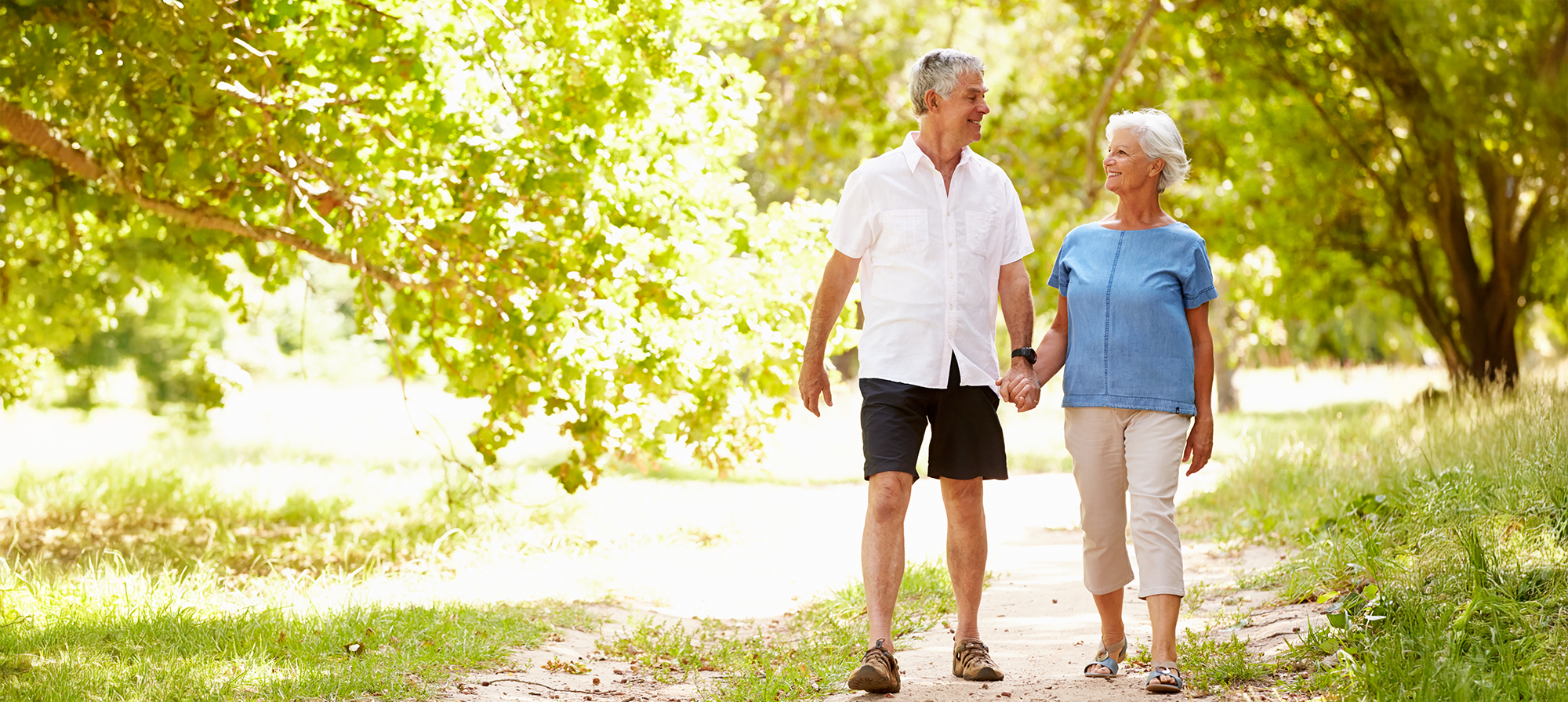
Spending time in green spaces, with trees, lawns, plants, and flowers, can boost brain health by slowing cognitive decline and lowering the risk for dementia.
Spending time in nature isn’t just refreshing—it’s a powerful prescription for healthy aging—especially for your brain health as you age. You likely know from experience the feeling of calm and peace that comes from spending time in nature. A walk along a tree-lined lake lifts your mood. Sitting on a park lawn watching children play can make your worries vanish. You may instinctively be drawn to green spaces, but you may not know this is actually a prescription for health, including brain health.
Exposure to green spaces may help reduce the risk of cognitive decline, dementia, and [Alzheimer’s disease](https://www.alzinfo.org/articles/prevention/the-power-of-greenery/) in older adults. Even simple activities like strolling in a park, gardening, or sitting under leafy trees can improve your mood, lower the risk of depression, and enhance sleep quality.
How time spent in green spaces benefits your brain health
Cognitive benefits linked with time spent in green spaces are due to the way nature can:
- Bring greater calm and lower stress. Studies show that time spent in nature can lower stress. Less stress is better for the brain. This is because the stress hormone cortisol causes the brain to start functioning in ways that aren’t helpful or healthy. It puts the brain in a constant, stress-induced state of alertness. This in turn lowers cognitive ability—making it hard to focus, make decisions, or control emotions.
- **Lower your exposure to air pollution.** Another reason green spaces contribute to brain health is their lack of pollution. Trees and other greenery help to filter the air, making it less polluted. Studies have linked poor air quality to the shrinking of the brain and other brain changes found in Alzheimer’s disease. Less pollution in the air you breathe helps keep your brain healthy.
- **Encourage increased physical activity.** Being outside in a park or garden can inspire you to be more active. You may want to walk, go for a run, garden, or ride a bike. This kind of physical activity helps lower the risk of dementia. One reason for this is that physical activity increases blood flow, helping deliver oxygen to the brain and other parts of the body. Also, aging alters the brain’s structure and function. This can raise the risk of dementia and Alzheimer's disease. Exercise offsets these changes, especially in the region of the brain that controls memory. Something as simple as [walking](https://blog.silverandfit.com/tag/healthy-aging/walking-routine) is effective.
- **Provide a place for social interaction.** Getting out in nature offers a chance to meet your friends at the park for cornhole or bocce ball. Or you could sit together on a park bench and visit. You might hike around parks on trails and paths with your friends. Taking your dog for a walk in a green space means you will likely meet other friendly dog walkers. All this social interaction contributes to your brain health.
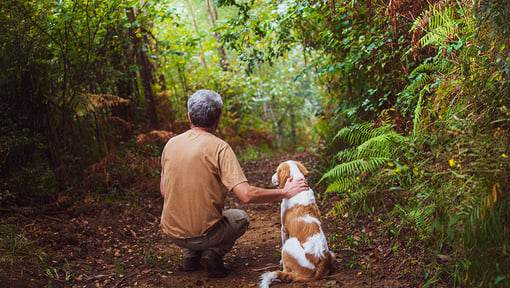
Brain functions that green spaces can help improve
Several aspects of cognitive health can benefit from spending time in green spaces. Scientific studies suggest that time spent in green spaces can:
- Build memory skills and lower the risk of dementia and Alzheimer’s
- Boost attention
- Enable faster thinking
One study found that those living in areas with a good amount of greenery had a 28 percent lower risk of Alzheimer’s disease than those with little access to green spaces.
Another study asked one group of people to walk through an arboretum. Another group walked along roads with heavy traffic. Then they all took memory tests. Those who had walked through greenery scored 20 percent higher in memory.
Those in another study took online cognitive tests. The scientists used satellite images to assess the amount of green space in the participants' neighborhoods. Those who lived in areas with more green space scored higher on attention and thinking speed, as well as overall cognition.
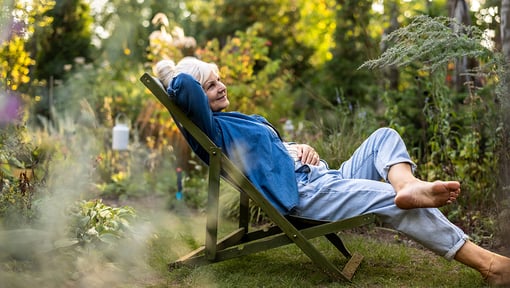
What is a green space?
The good news is that you don’t need to journey to a forested area in the mountains to enjoy green spaces. Even small green spaces in urban areas can have a positive impact on brain health. A small backyard or urban park can serve as your green space.
Here are a few kinds of green spaces you can enjoy:
- Backyard gardens. You may not need to look further than your own backyard for a welcoming green space. Even if your space is small, you can line a patio or walkway with potted plants.
- Street greenery. Walk under a canopy of tall trees. Amble along a sidewalk lined with flowering bushes. Find a neighborhood near you with lush, mature landscaping and enjoy the various plants, trees, and blooms along the way.
- Small community parks. These planned green spaces, run by cities or counties, may offer paved paths that wind through lawns and planted bushes. Go for a walk or run. Or take a lunch and sit on the grass or at a picnic table, relaxing in the greenery.
- Local trails. Undeveloped land can sometimes be found just minutes from urban areas. These may offer trails that wind through trees and native vegetation.
- Large planned urban parks. The most famous example is New York City’s Central Park. Constructed in 1858, it’s the first landscaped public park in the U.S. You have only to visit Central Park on a sunny day to see that throngs of people flock to this green oasis bordered by skyscrapers. The park provides a place to escape from the bustle and traffic of the city into a calming space of lawns, towering trees, and colorful flowering bushes.
Whether you head to a massive urban park or simply relax outside in your own backyard, spending time in green spaces will benefit your brain health. You can lower your stress and boost your mood. You can get active and get your blood pumping. Or you can meet with friends to enjoy time together in green spaces. These and other outings in nature will help support better brain health now and in the future.
Not a Silver&Fit® member? Learn more about everything the program has to offer, including more helpful healthy living tips like this, [here on our website](https://www.silverandfit.com/).
*This information is not intended to take the place of regular medical care or advice. Please check with your doctor before using this information or beginning any self-care program. Images used for this article do not depict any members of the Silver&Fit program.*
References
American Brain Foundation. (2024, August 7). How stress affects the brain. [https://www.americanbrainfoundation.org/how-stress-affects-the-brain/](https://www.americanbrainfoundation.org/how-stress-affects-the-brain/)
Besser L. (2021). Outdoor green space exposure and brain health measures related to Alzheimer's disease: A rapid review. British Medical Journal Open, 11(5), e043456. [https://doi.org/10.1136/bmjopen-2020-043456](https://doi.org/10.1136/bmjopen-2020-043456)
Esmonde, K., Pollack Porter, K. M., Mahoney, P., Prochnow, T., Bridges Hamilton, C. N., & Umstattd Meyer, M. R. (2022). Lessons from sustainability of Play Streets in the United States. Preventive Medicine Reports, 28, 101894. [https://doi.org/10.1016/j.pmedr.2022.101894](https://doi.org/10.1016/j.pmedr.2022.101894)
Fischer Center for Alzheimer's Research Foundation. (2024, August 7). The power of greenery. [https://www.alzinfo.org/articles/prevention/the-power-of-greenery/](https://www.alzinfo.org/articles/prevention/the-power-of-greenery/)
Harvard T. H. Chan School of Public Health. (n.d.). Annotated literature review: Health benefits of urban greenspace. [https://hsph.harvard.edu/research/environmental-health-niehs/community-resources/annotated-literature-review-health-benefits-of-urban-greenspace/](https://hsph.harvard.edu/research/environmental-health-niehs/community-resources/annotated-literature-review-health-benefits-of-urban-greenspace/)
Miller, Korin. (2026, December 9). Scientists say this simple habit boosts brain health in as little as 12 weeks. Michigan State University. [https://healthcare.msu.edu/news/2025-12-28-Scientists-Say-This-Simple-Habit-Boosts-Brain-Health-in-as-Little-as-12-Weeks.html](https://healthcare.msu.edu/news/2025-12-28-Scientists-Say-This-Simple-Habit-Boosts-Brain-Health-in-as-Little-as-12-Weeks.html)
Mills, B. (2021, September 13.) How your local park benefits your brain. Cognitive Vitality. [https://www.alzdiscovery.org/cognitive-vitality/blog/how-your-local-park-benefits-your-brain](https://www.alzdiscovery.org/cognitive-vitality/blog/how-your-local-park-benefits-your-brain)
National Institute on Aging. (2022, September 1). Exposure to green space may boost cognitive health. [https://www.nia.nih.gov/news/exposure-green-space-may-boost-cognitive-health](https://www.nia.nih.gov/news/exposure-green-space-may-boost-cognitive-health)
Twohig-Bennett, C., & Jones, A. (2018). The health benefits of the great outdoors: A systematic review and meta-analysis of greenspace exposure and health outcomes. Environmental Research, 166, 628–637. [https://doi.org/10.1016/j.envres.2018.06.030](https://doi.org/10.1016/j.envres.2018.06.030)
Westlund, R. (2023, October 25). Greenspace and income levels may affect brain and health. University of Miami Miller School of Medicine. [https://news.med.miami.edu/greenspace-brain-health-alzheimers-dementia/](https://news.med.miami.edu/greenspace-brain-health-alzheimers-dementia/)
This article was written by Sharon Odegaard, edited by Gail Olson, CMT, HHP, and clinically reviewed by Elizabeth Thompson, MPH, RDN, on July 8, 2026.
[Return to Homepage](https://blog.silverandfit.com/)
## About the Author

### The Silver&Fit® Team at American Specialty Health
The award-winning Silver&Fit® Blog is brought to life by a seasoned team of professionals at American Specialty Health (ASH), an organization with nearly 2 decades of experience in senior wellness programming. The Silver&Fit® blog writers, editors, clinicians, designers, and marketing specialists are dedicated to delivering engaging, informative wellness content. Every article is carefully researched and clinically reviewed for accuracy. Our goal? Content that supports healthy aging through trusted, research-based insights on fitness, nutrition, stress management, and more, tailored specifically for older adults seeking to live more vibrant, active, and healthy lives.
#### Recommended Articles
[](https://blog.silverandfit.com/tag/healthy-aging/antibiotic-resistance)
##### [The Dangers of Antibiotic Resistance](https://blog.silverandfit.com/tag/healthy-aging/antibiotic-resistance)
\- August 17, 2026
[](https://blog.silverandfit.com/tag/healthy-aging/balance-training)
##### [6 Simple Balance Training Exercises to Help Prevent Falls](https://blog.silverandfit.com/tag/healthy-aging/balance-training)
\- June 29, 2026
### Popular Posts
### Get the latest tips from Silver&Fit in your inbox.
### Recent Post
### Recent Posts
[How to Build Empathy for Stronger Bonds and Better Health](https://blog.silverandfit.com/tag/lifestyle/empathy)
\- 14 September, 2026
[Training for Pickleball: Strength, Balance, and Injury Prevention](https://blog.silverandfit.com/tag/fitness/pickleball-training)
\- 14 September, 2026
[Why Solitude Is as Important to Your Well-Being as Socializing](https://blog.silverandfit.com/tag/lifestyle/solitude)
\- 14 September, 2026
[Nature RX: How Green Spaces Protect Your Brain Health](https://blog.silverandfit.com/tag/healthy-aging/green-spaces)
\- 14 September, 2026
[Fall Morning Muffins for a Cozy Start to Your Day](https://blog.silverandfit.com/tag/nutrition/fall-muffins)
\- 14 September, 2026
Brought To You By

### Silver&Fit
The Silver&Fit® program provides eligible members with a fitness center membership and options to stay Fit at Home.
-
-
-
-
-
### Topics
- [Nutrition (57)](https://blog.silverandfit.com/tag/nutrition)
- [Healthy Aging (55)](https://blog.silverandfit.com/tag/healthy-aging)
- [Fitness (53)](https://blog.silverandfit.com/tag/fitness)
- [Lifestyle (53)](https://blog.silverandfit.com/tag/lifestyle)
### We've been expertly designing senior fitness programs for nearly 20 years. Now, we're excited to share the health in our blog, free and available to the public. Interested? Get the latest fitness, healthy aging, lifestyle, and nutrition tips in your inbox!
SUBSCRIBE
[Facebookfacebook](https://www.facebook.com/SilverandFit) [Instagraminstagram](https://www.instagram.com/silverandfit/?hl=en) [youtube](https://www.youtube.com/user/silverandfit) [Pinterestpinterest](https://pinterest.com/silverandfit) [LinkedInlinkedin](https://www.linkedin.com/company/american-specialty-health)
- Useful Links
- [About Us](https://www.silverandfit.com/About)
- [Terms & Conditions](https://www.silverandfit.com/TermsAndConditions)
- [Privacy Statement](https://www.silverandfit.com/Privacy)
- [FAQ](https://www.silverandfit.com/FAQ)
- [Site Map](https://www.silverandfit.com/sitemap)
## Connect
[Contact Us](https://www.silverandfit.com/contactus)
## Language Assistance
The following PDF files will open in a new window. You must have [Adobe ReaderOpens an external site in a new tab](https://acrobat.adobe.com/us/en/acrobat/pdf-reader.html) installed to view the files.
- [English](https://blog.silverandfit.com/hubfs/SF%20Linked%20Files/M950-1031A%20Language%20Support_tcm26-161058.pdf)
- [Español](https://blog.silverandfit.com/hubfs/SF%20Linked%20Files/M950-1031A%20Language%20Support_tcm26-161058.pdf)
- [繁體中文](https://blog.silverandfit.com/hubfs/SF%20Linked%20Files/M950-1031A%20Language%20Support_tcm26-161058.pdf)
- [Tagalog](https://blog.silverandfit.com/hubfs/SF%20Linked%20Files/M950-1031A%20Language%20Support_tcm26-161058.pdf)
- [Tiếng Việt](https://blog.silverandfit.com/hubfs/SF%20Linked%20Files/M950-1031A%20Language%20Support_tcm26-161058.pdf)
- [العربية](https://blog.silverandfit.com/hubfs/SF%20Linked%20Files/M950-1031A%20Language%20Support_tcm26-161058.pdf)
- [Français](https://blog.silverandfit.com/hubfs/SF%20Linked%20Files/M950-1031A%20Language%20Support_tcm26-161058.pdf)
- [한국어](https://blog.silverandfit.com/hubfs/SF%20Linked%20Files/M950-1031A%20Language%20Support_tcm26-161058.pdf)
- [Русский](https://blog.silverandfit.com/hubfs/SF%20Linked%20Files/M950-1031A%20Language%20Support_tcm26-161058.pdf)
- [Deutsch](https://blog.silverandfit.com/hubfs/SF%20Linked%20Files/M950-1031A%20Language%20Support_tcm26-161058.pdf)
- [Kreyòl Ayisyen](https://blog.silverandfit.com/hubfs/SF%20Linked%20Files/M950-1031A%20Language%20Support_tcm26-161058.pdf)
- [हिंदी](https://blog.silverandfit.com/hubfs/SF%20Linked%20Files/M950-1031A%20Language%20Support_tcm26-161058.pdf)
- [Português](https://blog.silverandfit.com/hubfs/SF%20Linked%20Files/M950-1031A%20Language%20Support_tcm26-161058.pdf)
- [Italiano](https://blog.silverandfit.com/hubfs/SF%20Linked%20Files/M950-1031A%20Language%20Support_tcm26-161058.pdf)
- [Polski](https://blog.silverandfit.com/hubfs/SF%20Linked%20Files/M950-1031A%20Language%20Support_tcm26-161058.pdf)
- [اُردُو](https://blog.silverandfit.com/hubfs/SF%20Linked%20Files/M950-1031A%20Language%20Support_tcm26-161058.pdf)
- [אידיש](https://blog.silverandfit.com/hubfs/SF%20Linked%20Files/M950-1031A%20Language%20Support_tcm26-161058.pdf)
- [বাংলা](https://blog.silverandfit.com/hubfs/SF%20Linked%20Files/M950-1031A%20Language%20Support_tcm26-161058.pdf)
- [Ελληνικά](https://blog.silverandfit.com/hubfs/SF%20Linked%20Files/M950-1031A%20Language%20Support_tcm26-161058.pdf)
- [Shqiptar](https://blog.silverandfit.com/hubfs/SF%20Linked%20Files/M950-1031A%20Language%20Support_tcm26-161058.pdf)
Newtab\_Icon Clicking on these links will take you away from Silverandfit.com. Silver&Fit is not responsible for any content or the privacy practices of external websites.
The Silver&Fit program is a product of American Specialty Health Fitness, Inc. (ASH Fitness), a subsidiary of American Specialty Health Incorporated. ASH Fitness complies with applicable federal civil rights laws and does not discriminate on the basis of race, color, national origin, age, disability, or sex.
© 2020-2025 American Specialty Health Incorporated (ASH). All Rights Reserved.
Last Updated 11/2025