---
title: Understanding Dry Eyes and Finding Treatment Options
description: When the tears you produce are not helping your eyes to function well, you may have a condition called dry eyes. Finding treatment is vital.
image: https://blog.silverandfit.com/hubfs/SF%20Blog/Article%20Images/Blog%20199%20-%20Dry%20Eyes/Feature_Dry%20Eyes.jpg
---
[LOG IN](https://www.silverandfit.com/identity/login) [Check Eligibility](https://www.silverandfit.com/identity/registration)
- [HOMEPAGE](https://www.silverandfit.com/)
- [WELL-BEING CLUB](https://www.silverandfit.com/well-being-club)
- [FITNESS CENTERS](https://www.silverandfit.com/search)
- FIT AT HOME
- [Workouts](https://www.silverandfit.com/workouts)
- [Home Kits](https://www.silverandfit.com/home-kits)
- [PARTICIPATING HEALTH PLANS](https://www.silverandfit.com/health-plans)
- [HOW IT WORKS](https://www.silverandfit.com/how-it-works)
- [FAQ](https://www.silverandfit.com/faq)
- [BLOG](https://blog.silverandfit.com/)
### Topics
- Select a Topic
### Get the latest tips in your inbox
SUBSCRIBE

By providing your email you consent to receiving updates to the Silver&Fit blog by email. Silver&Fit does not share or sell your email to any third-parties. You may unsubscribe at any time by clicking the link at the bottom of the email.
[Healthy Aging](https://blog.silverandfit.com/tag/healthy-aging)
# Understanding Dry Eyes and Finding Treatment Options

By [The Silver&Fit® Team at American Specialty Health](https://blog.silverandfit.com/author/american-specialty-health) on March 23, 2026
[](http://www.facebook.com/sharer/sharer.php?u=https://blog.silverandfit.com/tag/healthy-aging/dry-eyes) [](https://twitter.com/home?status=Understanding%20Dry%20Eyes%20and%20Finding%20Treatment%20Options+https://blog.silverandfit.com/tag/healthy-aging/dry-eyes) [](http://www.linkedin.com/shareArticle?mini=true&url=https://blog.silverandfit.com/tag/healthy-aging/dry-eyes) [](mailto:?body=https://blog.silverandfit.com/tag/healthy-aging/dry-eyes)

When the tears you produce are not helping your eyes to function well, you may have a condition called dry eyes. Finding treatment is vital.
If you notice that your eyes are watering more these days or that they’re burning or uncomfortable, the issue may be due to a condition called dry eyes. Tears cover and protect your eyes. And when you don’t produce enough tears, or they don’t function as well as they should, it can lead to dry eyes.
While dry eyes do not directly lead to blindness, complications from the condition can affect vision. The cornea, which is the clear covering of the eye, can become damaged. Common issues with the cornea due to dry eyes include corneal sores (ulcers) and corneal abrasions (scratches).
Finding the most effective treatments *for you* is vital to preserve your vision as well as bring you comfort.

**A look at normal tears **
The tears in your eyes are composed of 3 layers that make up a protective covering called the tear film. Your eyes work well when your tear film works as it should. A tear is broken down into these layers:
- An oily layer. This is the outside of the tear and keeps the surface smooth. It serves to keep tears from drying up too quickly. It is made in the meibomian glands in the eyelids.
- A watery layer. This middle layer makes up what we see as “tears.” It cleans the eye by washing away dirt and debris. It is made in the lacrimal glands in the eyelids.
- A mucus layer. This inner layer keeps the other layers from sticking to the eye. It is clear and covers the white of the eye and the inside of the eyelid. This layer is made in the conjunctiva of the eye. The conjunctiva is a thin layer that covers the whites of your eyes and inner eyelids.
Blinking spreads these layers over your eye.
But it’s not uncommon for the tear film to develop problems. These can include producing too few tears, tears that evaporate too quickly, or a combination of both problems. These issues can lead to dry eyes.

**The symptoms of dry eyes **
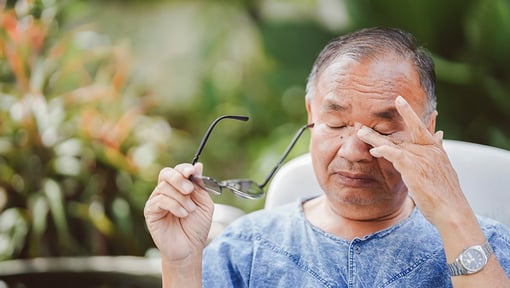
One common symptom of dry eyes is watery eyes. This may sound counterintuitive. But “dry eyes” may result in too many tears. You may find your eyes welling up and tears running down your cheeks. This happens because the glands in the eye don’t make enough oil. The watery layer of tears evaporates too fast. Then the tear glands try to compensate by making too many tears.
Other symptoms of dry eyes are:
- Blurry vision
- Burning or stinging eyes
- Scratchy feelings in the eyes
- Sensitivity to light
- Inflammation of the eyelids or other parts of the eye
**Possible causes of dry eyes **
If you have dry eyes, you may wonder about the [causes](https://my.clevelandclinic.org/health/diseases/24479-dry-eye). Here are some lifestyle and medical factors that can cause you to develop dry eyes.
- Electronic screens. Using screens throughout the day may cause dry eyes. Staring at a computer or phone screen, or watching TV, results in less blinking. Dry eyes may follow.
- Low humidity indoors. Low humidity in your home may cause dry eyes. Heat and air conditioning can dry the air. Typical low-humidity environments also include airplanes, office buildings that run air conditioning, and hospitals.
- Sleep apnea masks. These tend to leak air around your eyes, which can dry your eyes.
- Contact lenses. The lenses can alter the tear film or the oxygen that reaches the eyes.
- Medications. Some over-the-counter and prescription drugs can cause dry eyes. These include:
- Sedatives and sleep aids
**-** Cold remedies
**-** Meds for anxiety/depression
**-** Allergy meds
**-** Blood pressure meds
**-** Medicated eye drops with preservatives in them
If you are taking any of these drugs and experiencing dry eyes, talk with your doctor to see what can be done to reduce your eye dryness.
- Health issues. Some health conditions can cause dry eyes. These include:
**-** Diabetes
**-** Thyroid issues
**-** Rheumatoid arthritis
**-** Parkinson’s disease
**-** Sjogren’s syndrome
**-** Lupus
**-** Menopause
**-** Allergies
Because dry eyes could be an indication of a serious health condition, it’s vital that you seek medical advice and treatment.
**First steps to take if you have symptoms of dry eyes **
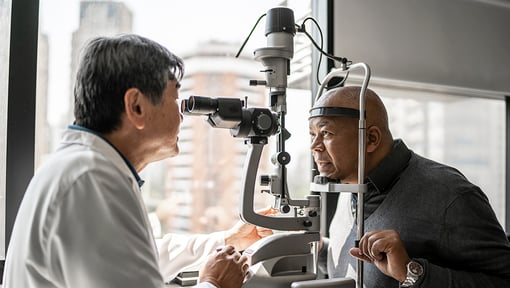
If you are dealing with any symptoms that may indicate dry eyes, such as burning, stinging, and/or light sensitivity, the first step is to seek a medical evaluation. Causes and symptoms can be complicated, so getting medical help in diagnosing and managing dry eyes is the way to go.
You will want to establish care with either an optometrist or an ophthalmologist—but which kind of eye doctor should you see first?
It’s fine to start with an optometrist if you have symptoms of dry eyes. If you need more medical care than the optometrist can provide, they will refer you to an ophthalmologist.
You can think of an optometrist as a primary eye care provider. An optometrist can give you a general eye exam and oversee your care for conditions such as vision issues, glasses, contact lenses, and prescribe medications for some eye conditions.
An ophthalmologist, on the other hand, is a medical doctor. This eye doctor can also help you manage dry eyes. Beyond that, an ophthalmologist can treat medical issues such as cataracts, macular degeneration, and retinal detachment.
If you find that you have medical issues causing your dry eyes, you may need to see other doctors that specialize in health care for those conditions. For example, if you have dry eyes from your Parkinson’s disease, you may need to work with your neurologist in addition to your eye doctor.
If you already have an established relationship with either kind of eye doctor, start there and know that you will receive the care you need from them or through a referral.
When you go in for your eye exam, the doctor will evaluate the number of tears you’re producing and their thickness. You may have a dilated eye exam for this step so the doctor can better see the structures of your eyes inside. From there, your doctor will talk with you about treatments that can help.

**Managing dry eyes begins with self-care treatments **
The goal of treating dry eyes is to conserve healthy tears, increase tear production, and lower inflammation of the eyelids. After your exam, your optometrist or ophthalmologist will be able to advise you on the treatment options for managing dry eyes. They can help you decide which options may work best for you. Some treatments are easy self-care measures you can take at home.
One easy step to take is to stay hydrated. Your eyes need water, as does the rest of your body. Besides drinking water, you can eat foods that have a high water content, such as cucumbers and watermelon. While this may help, you may also need products to manage dry eyes.
Here are a few other self-care treatments that often help in managing dry eyes.
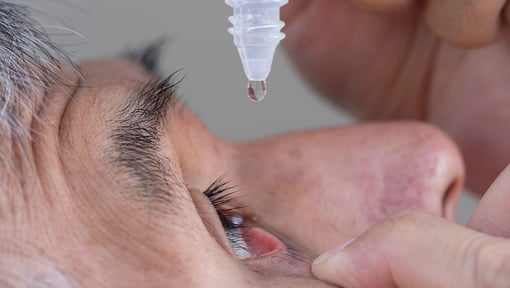
- Eye drops. Over-the-counter (OTC) eye drops add tears to your eyes. These drops may be called “artificial tears.” Use the drops as advised, which may be multiple times per day. Products with preservatives may irritate your eyes, so look for preservative-free options. Your doctor can point you to a brand of eye drops, as the choices may be confusing. If OTC drops don’t help ease symptoms, check back with your doctor.
- Eye ointments. These coat your eyes and give relief from symptoms. But they are thicker than drops and may cloud your vision. They are best used just before you go to sleep rather than during the day.
- Warm compresses. You can place a warm compress over your eyes for 10 minutes each evening. Use a clean washcloth soaked in warm water or a mask heated in the microwave. The warmth helps loosen the oil secretions in your eyes. This improves the quality of your tears. The heat can also loosen any debris under the lids, and it is soothing and brings comfort.
- Eyelid cleansers. These help remove bacteria and debris from around the eyes, which can lower inflammation. You can apply over-the-counter eyelid cleansers by spraying them onto a cotton ball and wiping them on the lids. Your doctor may advise you to cleanse your eyelids after using the warm mask or compress.
- Omega-3 fatty acid supplements. Your doctor may recommend that you take omega-3 fatty acid nutritional supplements. Evidence that these help eye conditions is not strong, but many doctors believe they may work for some people. Of course, you can also eat plenty of foods high in omega-3 fatty acids, such as [salmon and other fatty fish](https://blog.silverandfit.com/tag/nutrition/fish-tacos), edamame, and walnuts.
Purchase the products your eye doctor recommends. See what helps. And keep in contact with your doctor as you try out treatments.
**Managing dry eyes – beyond self-care treatments **
If self-care treatments don’t clear up your dry eye symptoms, it may be time to turn to medical treatments with the help of your eye doctor. Here are some options.
- Prescription eye drops. These are stronger than OTC eye drops. They can reduce inflammation or lower the rate at which tears evaporate.
- Plugs for tear ducts. Tiny gel-like plugs can be placed in the tear ducts to block tears from draining. Keeping tears in the eyes longer works to relieve dry eyes. The plugs can be removed when symptoms are resolved.
- Special contact lenses. Known as scleral lenses, these come into contact with the whites of your eyes. They protect your eyes, help keep them moist, and also correct your vision.
- Surgery. If other treatments fail, surgery is an option. The decision to turn to surgery is made in consultation with your doctor.
Dry eyes are common. Symptoms include excessive watering of the eyes, burning and stinging of the eyes, blurry vision, and inflammation of the eyelids or eye area. If you have symptoms, see your eye doctor and follow their advice. Keeping your eyes healthy and comfortable will help you live your best life!
Not a Silver&Fit® member? Learn more about everything the program has to offer, including more helpful healthy living tips like this, [here on our website](https://www.silverandfit.com/).
*This information is not intended to take the place of regular medical care or advice. Please check with your doctor before using this information or beginning any self-care program. Images used for this article do not depict any members of the Silver&Fit Program.*
**References**
American Academy of Ophthalmology. (2025, December 8). What is dry eye? Symptoms, causes, and treatment. [https://www.aao.org/eye-health/diseases/what-is-dry-eye](https://www.aao.org/eye-health/diseases/what-is-dry-eye)
American Optometric Association. (n.d.). Dry eye. [https://www.aoa.org/healthy-eyes/eye-and-vision-conditions/dry-eye](https://www.aoa.org/healthy-eyes/eye-and-vision-conditions/dry-eye)
Biggers, L. (2023, November 28). When to see your doctor for dry eye. Duke Health. [https://www.dukehealth.org/blog/when-see-your-doctor-dry-eye](https://www.dukehealth.org/blog/when-see-your-doctor-dry-eye)
Cleveland Clinic. (2025, June 20). Dry eyes. [https://my.clevelandclinic.org/health/diseases/24479-dry-eye](https://my.clevelandclinic.org/health/diseases/24479-dry-eye)
Cleveland Clinic. (2025, May 27). Optometrist vs. ophthalmologist: Who should you see? Cleveland Clinic Health Essentials. [https://health.clevelandclinic.org/optometrist-or-ophthalmologist-which-is-best-for-your-eye-care](https://health.clevelandclinic.org/optometrist-or-ophthalmologist-which-is-best-for-your-eye-care)
Ginsberg Eye Ophthalmology. (2021, December 29). Will drinking more water help dry eye symptoms?
[https://www.ginsbergeye.com/eye-health/will-drinking-more-water-help-dry-eye-symptoms/](https://www.ginsbergeye.com/eye-health/will-drinking-more-water-help-dry-eye-symptoms/)
Lazarus, R. (n.d.). Systemic diseases that cause dry eye. Optometrists.org. [https://www.optometrists.org/general-practice-optometry/guide-to-eye-conditions/dry-eye/what-is-dry-eye-syndrome/systemic-diseases-that-cause-dry-eye/](https://www.optometrists.org/general-practice-optometry/guide-to-eye-conditions/dry-eye/what-is-dry-eye-syndrome/systemic-diseases-that-cause-dry-eye/)
Mayo Clinic. (2022, September 23). Dry eyes. [https://www.mayoclinic.org/diseases-conditions/dry-eyes/symptoms-causes/syc-20371863](https://www.mayoclinic.org/diseases-conditions/dry-eyes/symptoms-causes/syc-20371863)
National Eye Institute. (2025, August 6). Dry eye. [https://www.nei.nih.gov/learn-about-eye-health/eye-conditions-and-diseases/dry-eye](https://www.nei.nih.gov/learn-about-eye-health/eye-conditions-and-diseases/dry-eye)
This article was written by Sharon Odegaard, edited by Stephanie Ruiz, and clinically reviewed by Justine Greene, MD, on January 7, 2026.
[Return to Homepage](https://blog.silverandfit.com/)
## About the Author

### The Silver&Fit® Team at American Specialty Health
The award-winning Silver&Fit® Blog is brought to life by a seasoned team of professionals at American Specialty Health (ASH), an organization with nearly 2 decades of experience in senior wellness programming. The Silver&Fit® blog writers, editors, clinicians, designers, and marketing specialists are dedicated to delivering engaging, informative wellness content. Every article is carefully researched and clinically reviewed for accuracy. Our goal? Content that supports healthy aging through trusted, research-based insights on fitness, nutrition, stress management, and more, tailored specifically for older adults seeking to live more vibrant, active, and healthy lives.
#### Recommended Articles
[](https://blog.silverandfit.com/tag/healthy-aging/green-spaces)
##### [Nature RX: How Green Spaces Protect Your Brain Health](https://blog.silverandfit.com/tag/healthy-aging/green-spaces)
- September 14, 2026
[](https://blog.silverandfit.com/tag/healthy-aging/antibiotic-resistance)
##### [The Dangers of Antibiotic Resistance](https://blog.silverandfit.com/tag/healthy-aging/antibiotic-resistance)
- August 17, 2026
[](https://blog.silverandfit.com/tag/healthy-aging/balance-training)
##### [6 Simple Balance Training Exercises to Help Prevent Falls](https://blog.silverandfit.com/tag/healthy-aging/balance-training)
- June 29, 2026
### Popular Posts
### Get the latest tips from Silver&Fit in your inbox.
### Recent Post
### Recent Posts
[Nature RX: How Green Spaces Protect Your Brain Health](https://blog.silverandfit.com/tag/healthy-aging/green-spaces)
- 23 March, 2026
[Fall Morning Muffins for a Cozy Start to Your Day](https://blog.silverandfit.com/tag/nutrition/fall-muffins)
- 23 March, 2026
[The Gut-Brain Connection and Its Impact on Your Health](https://blog.silverandfit.com/tag/lifestyle/gut-brain-connection)
- 23 March, 2026
[The Types of Fiber and Why They Matter](https://blog.silverandfit.com/tag/nutrition/fiber-types)
- 23 March, 2026
[The Dangers of Antibiotic Resistance](https://blog.silverandfit.com/tag/healthy-aging/antibiotic-resistance)
- 23 March, 2026
Brought To You By

### Silver&Fit
The Silver&Fit® program provides eligible members with a fitness center membership and options to stay Fit at Home.
-
-
-
-
-
### Topics
- [Nutrition (57)](https://blog.silverandfit.com/tag/nutrition)
- [Healthy Aging (55)](https://blog.silverandfit.com/tag/healthy-aging)
- [Fitness (52)](https://blog.silverandfit.com/tag/fitness)
- [Lifestyle (51)](https://blog.silverandfit.com/tag/lifestyle)
### We've been expertly designing senior fitness programs for nearly 20 years. Now, we're excited to share the health in our blog, free and available to the public. Interested? Get the latest fitness, healthy aging, lifestyle, and nutrition tips in your inbox!
SUBSCRIBE
[Facebookfacebook](https://www.facebook.com/SilverandFit) [Instagraminstagram](https://www.instagram.com/silverandfit/?hl=en) [youtube](https://www.youtube.com/user/silverandfit) [Pinterestpinterest](https://pinterest.com/silverandfit) [LinkedInlinkedin](https://www.linkedin.com/company/american-specialty-health)
- Useful Links
- [About Us](https://www.silverandfit.com/About)
- [Terms & Conditions](https://www.silverandfit.com/TermsAndConditions)
- [Privacy Statement](https://www.silverandfit.com/Privacy)
- [FAQ](https://www.silverandfit.com/FAQ)
- [Site Map](https://www.silverandfit.com/sitemap)
## Connect
[Contact Us](https://www.silverandfit.com/contactus)
## Language Assistance
The following PDF files will open in a new window. You must have [Adobe ReaderOpens an external site in a new tab](https://acrobat.adobe.com/us/en/acrobat/pdf-reader.html) installed to view the files.
- [English](https://blog.silverandfit.com/hubfs/SF%20Linked%20Files/M950-1031A%20Language%20Support_tcm26-161058.pdf)
- [Español](https://blog.silverandfit.com/hubfs/SF%20Linked%20Files/M950-1031A%20Language%20Support_tcm26-161058.pdf)
- [繁體中文](https://blog.silverandfit.com/hubfs/SF%20Linked%20Files/M950-1031A%20Language%20Support_tcm26-161058.pdf)
- [Tagalog](https://blog.silverandfit.com/hubfs/SF%20Linked%20Files/M950-1031A%20Language%20Support_tcm26-161058.pdf)
- [Tiếng Việt](https://blog.silverandfit.com/hubfs/SF%20Linked%20Files/M950-1031A%20Language%20Support_tcm26-161058.pdf)
- [العربية](https://blog.silverandfit.com/hubfs/SF%20Linked%20Files/M950-1031A%20Language%20Support_tcm26-161058.pdf)
- [Français](https://blog.silverandfit.com/hubfs/SF%20Linked%20Files/M950-1031A%20Language%20Support_tcm26-161058.pdf)
- [한국어](https://blog.silverandfit.com/hubfs/SF%20Linked%20Files/M950-1031A%20Language%20Support_tcm26-161058.pdf)
- [Русский](https://blog.silverandfit.com/hubfs/SF%20Linked%20Files/M950-1031A%20Language%20Support_tcm26-161058.pdf)
- [Deutsch](https://blog.silverandfit.com/hubfs/SF%20Linked%20Files/M950-1031A%20Language%20Support_tcm26-161058.pdf)
- [Kreyòl Ayisyen](https://blog.silverandfit.com/hubfs/SF%20Linked%20Files/M950-1031A%20Language%20Support_tcm26-161058.pdf)
- [हिंदी](https://blog.silverandfit.com/hubfs/SF%20Linked%20Files/M950-1031A%20Language%20Support_tcm26-161058.pdf)
- [Português](https://blog.silverandfit.com/hubfs/SF%20Linked%20Files/M950-1031A%20Language%20Support_tcm26-161058.pdf)
- [Italiano](https://blog.silverandfit.com/hubfs/SF%20Linked%20Files/M950-1031A%20Language%20Support_tcm26-161058.pdf)
- [Polski](https://blog.silverandfit.com/hubfs/SF%20Linked%20Files/M950-1031A%20Language%20Support_tcm26-161058.pdf)
- [اُردُو](https://blog.silverandfit.com/hubfs/SF%20Linked%20Files/M950-1031A%20Language%20Support_tcm26-161058.pdf)
- [אידיש](https://blog.silverandfit.com/hubfs/SF%20Linked%20Files/M950-1031A%20Language%20Support_tcm26-161058.pdf)
- [বাংলা](https://blog.silverandfit.com/hubfs/SF%20Linked%20Files/M950-1031A%20Language%20Support_tcm26-161058.pdf)
- [Ελληνικά](https://blog.silverandfit.com/hubfs/SF%20Linked%20Files/M950-1031A%20Language%20Support_tcm26-161058.pdf)
- [Shqiptar](https://blog.silverandfit.com/hubfs/SF%20Linked%20Files/M950-1031A%20Language%20Support_tcm26-161058.pdf)
Newtab\_Icon Clicking on these links will take you away from Silverandfit.com. Silver&Fit is not responsible for any content or the privacy practices of external websites.
The Silver&Fit program is a product of American Specialty Health Fitness, Inc. (ASH Fitness), a subsidiary of American Specialty Health Incorporated. ASH Fitness complies with applicable federal civil rights laws and does not discriminate on the basis of race, color, national origin, age, disability, or sex.
© 2020-2025 American Specialty Health Incorporated (ASH). All Rights Reserved.
Last Updated 11/2025