---
title: Longevity Lessons From the “Blue Zones”
description: Discover lessons inspired by the Blue Zones, where the world’s healthiest, longest-lived people reside. Their insights can help you create your own Blue Zone.
image: https://blog.silverandfit.com/hubfs/SF%20Blog/Article%20Images/Blog%20209%20-%20Blue%20Zones/Healthy%20Aging_Feature_Blue%20Zones.jpg
---
[LOG IN](https://www.silverandfit.com/identity/login) [Check Eligibility](https://www.silverandfit.com/identity/registration)
- [HOMEPAGE](https://www.silverandfit.com/)
- [WELL-BEING CLUB](https://www.silverandfit.com/well-being-club)
- [FITNESS CENTERS](https://www.silverandfit.com/search)
- FIT AT HOME
- [Workouts](https://www.silverandfit.com/workouts)
- [Home Kits](https://www.silverandfit.com/home-kits)
- [PARTICIPATING HEALTH PLANS](https://www.silverandfit.com/health-plans)
- [HOW IT WORKS](https://www.silverandfit.com/how-it-works)
- [FAQ](https://www.silverandfit.com/faq)
- [BLOG](https://blog.silverandfit.com/)
### Topics
- Select a Topic
- [All](https://blog.silverandfit.com)
- [Nutrition](https://blog.silverandfit.com/tag/nutrition)
- [Healthy Aging](https://blog.silverandfit.com/tag/healthy-aging)
- [Fitness](https://blog.silverandfit.com/tag/fitness)
- [Lifestyle](https://blog.silverandfit.com/tag/lifestyle)
### Get the latest tips in your inbox
SUBSCRIBE

By providing your email you consent to receiving updates to the Silver&Fit blog by email. Silver&Fit does not share or sell your email to any third-parties. You may unsubscribe at any time by clicking the link at the bottom of the email.
[Healthy Aging](https://blog.silverandfit.com/tag/healthy-aging)
# Longevity Lessons From the “Blue Zones”

By [The Silver&Fit® Team at American Specialty Health](https://blog.silverandfit.com/author/american-specialty-health) on June 1, 2026
[](http://www.facebook.com/sharer/sharer.php?u=https://blog.silverandfit.com/tag/healthy-aging/blue-zones) [](https://twitter.com/home?status=Longevity%20Lessons%20From%20the%20“Blue%20Zones”+https://blog.silverandfit.com/tag/healthy-aging/blue-zones) [](http://www.linkedin.com/shareArticle?mini=true&url=https://blog.silverandfit.com/tag/healthy-aging/blue-zones) [](mailto:?body=https://blog.silverandfit.com/tag/healthy-aging/blue-zones)

Discover lessons inspired by the Blue Zones, where the world’s healthiest, longest-lived people reside. Their insights can help you create your own Blue Zone.
For centuries, people have pondered the secret to living forever. Although that exact answer isn't known, the secret to living *longer* may be within your reach.
There are 5 regions around the world known as “Blue Zones”—areas where people tend to live much longer than average, often more than 90 years. Compared to people in the United States, these groups are 10 times more likely to live to 100 years old. Not only are they living longer, but [they are living *healthily*](https://blog.silverandfit.com/tag/lifestyle/longevity). On average, people in the Blue Zones have far lower rates of chronic illness, heart disease, cancer, dementia, and obesity.
So, how did Blue Zones come to be discovered? A National Geographic explorer, Dan Buettner, spent years alongside scientists studying these long-lived regions and their shared lifestyle patterns. They uncovered these 5 Blue Zones:
- Okinawa, Japan
- Sardinia, Italy
- Ikaria, Greece
- Nicoya Peninsula, Costa Rica
- Loma Linda, California
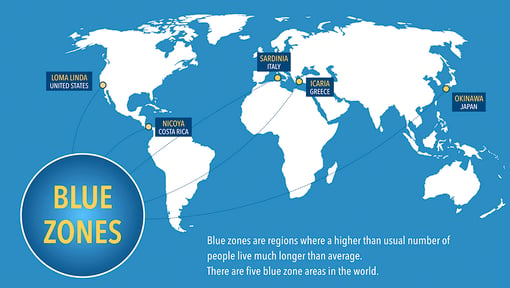
Fun fact: The term Blue Zone came to be after researchers marked them on maps with a blue dot. Hence, “blue” zones.
These populations have found their “elixirs of life” in the form of nourishing meals, lasting bonds, and mindful movement. While the daily lives of people in each Blue Zone vary, they share some core habits. Here are 7 lessons from Blue Zones to help you create your own:
**1. Center your diet around plants.**
While no two Blue Zones are identical, they each tend to follow a plant-based diet. People in the Blue Zones have taken control of ingredients by growing their own food or buying local. You won’t find heavily processed foods on a Blue Zone table. They eat lots of vegetables, beans, whole grains, nuts, and fruits. Meat is not a staple, but they do eat it once in a while.
These are key parts of the [Mediterranean diet](https://blog.silverandfit.com/tag/nutrition/mediterranean-diet), one of the world’s healthiest eating plans. In fact, Greece (where Ikaria is located) is known to practice this diet more than any other region in the world. Italy (where Sardinia is located) follows close behind them. The other Blue Zones follow similar plant-based diets. Seventh Day Adventists, a health-focused religious group deeply rooted in Loma Linda, eat vegetarian diets in line with their faith’s health teachings. In Nicoya, meals often center on beans, corn, and squash. In Okinawa, people traditionally eat diets rich in vegetables, sweet potatoes, and soy foods.
Here are some *plant-powered longevity staples* from each Blue Zone for you to try:
- Okinawa: *Purple sweet potato and tofu*. About 70 percent of the Okinawan diet includes purple sweet potato!
- Sardinia: *Minestrone*. Most Sardinians enjoy this hearty stew every week. It has beans, a pearl-shaped pasta called fregula, and lots of seasonal vegetables.
- Ikaria: [*Chickpea stew*](https://www.bluezones.com/recipe/chickpea-stew-with-honey-roasted-cauliflower-root-vegetables/). Simple meals of legumes, foraged veggies, and olive oil are everyday staples.
- Loma Linda: *Hearty oatmeal with seasonal fruit*. Oatmeal is a cornerstone of the Adventist diet.
- Nicoya: *Plantains*. These starchy relatives of bananas are a savory staple in Central American cooking. A classic dish is the Costa Rican casado, containing plantains, beans, rice, and vegetables.

**2. Make mealtimes special.**
Across all 5 Blue Zones, there is more to meals than just the food on the table. These cultures place a focus on who is around the table as well. Both cooking and eating are thought of as sacred practices that bring families and friends together. Along with hearty, home-cooked meals, these groups share laughter, stories, and meaningful rituals.
Okinawans often start meals with “Itadakimasu,” a phrase expressing thanks for the food and the hands that made it. The Adventists in Loma Linda also share weekly meals after church and open them with gratitude. Nicoyans make tortillas by hand, the older generations teaching the younger, which makes cooking a ritual rather than a chore. Both Ikarians and Sardinians enjoy long, slow meals that allow for digestion and conversation—sometimes leading to naps. In fact, there’s a saying in Italy: “a tavola non s’invecchia,” which means “at the table, one does not grow old.”
The rituals at the end of Blue Zone meals often feature a comforting treat. They allow for indulgence through homemade baked goods, hot tea, or locally made coffee. And it’s the rituals that make mealtimes special, not hours of cooking fancy food. It’s about finding nourishment through connection as well as balanced meals.
To make *special mealtimes* part of your own Blue Zone:
- Share at least one home-cooked meal with your family or friends each week.
- Set the table for dinner, maybe even with those plates you save for special occasions. Light some candles and play soft music.
- Be prepared with meaningful questions to ask your loved ones about their days.
- Create your own simple traditions like “Soup Sunday,” cooking together once a week, or enjoying a nourishing family breakfast before work/school.

**3. Eat mindfully.**
Practicing mindful, moderate eating is a large part of how Blue Zone citizens make mealtimes special. These groups make sure not to overeat. They also tend to eat their biggest meals earlier in the day. And eating slowly helps them stay in tune with their bodies. Okinawans follow “hara hachi bu,” which translates to “eat until 80 percent full.” Across all Blue Zones, meals are a time for being fully present.
To make *mindful eating* part of your own Blue Zone:
- Eat without screens nearby.
- Play calm instrumental music quietly in the background.
- Chew slowly and focus on the tastes and textures of your food.
- Notice when you start to feel satisfied and finish eating before you’re overly full.
- Take a few deep breaths when you sit down to enjoy a meal.

**4. Find your purpose.**
Having a strong [purpose in life](https://blog.silverandfit.com/tag/lifestyle/embrace-your-life-purpose-for-better-health) is linked with lower stress and better long-term health outcomes. Some research even shows that a sense of purpose is worth up to 7 years of extra life expectancy. Blue Zone residents don’t view purpose as a grand life plan but rather a reason to wake up, something to look forward to each day.
In Okinawa, this purpose is called *ikigai*. In Nicoya, it’s known as *plan de vida*. From small hobbies to long-term projects, long-lived people make sure they feel useful and fulfilled from day to day. One centenarian woman in Okinawa finds purpose in sharing joy with her family, believing that “laughter is longevity.”
To make *purpose* part of your own Blue Zone:
- Reflect on what gives your life meaning. Notice when you feel happiest, what values matter most to you, and what energizes you.
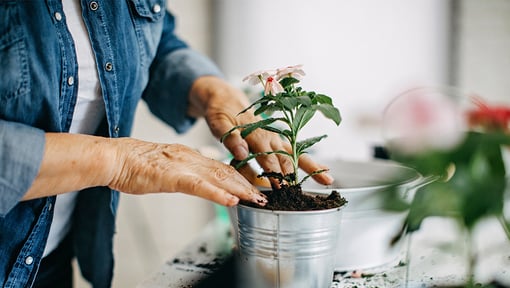
- Build purpose into your daily life, even if it’s just for 10 minutes. If you enjoy caring for the Earth, this might look like watering plants or composting. If you find value in supporting others, give your loved ones a call or make them a meal. Set aside time for daily rituals that you enjoy.
- Use your strengths in small ways. Look for everyday moments to use what you’re good at to connect with or support others.
**5. Embrace community, faith, and family.**
Relationships are at the center of each Blue Zone. Whether it’s through religious gatherings or volunteering, the healthiest people in the world find meaning in staying involved with something that reminds them of a bigger picture.
In Loma Linda, many residents volunteer through their church or community to help others, which also nurtures their own sense of purpose. In Okinawa, lifelong social groups called *moai* offer companionship and shared responsibility to care for each other. Being part of a meaningful cause or group not only enriches lives but also promotes longevity, encouraging members to eat balanced meals, move their bodies, and connect with others.
To make *community* part of your own Blue Zone:
- Volunteer for a cause that’s meaningful to you. Reach out to a local food bank, donate to seasonal drives, or join interfaith service days.
- Join a book club to create bonds and share ideas.
- Offer to pick up groceries for a friend or neighbor when you go out.
- Invite a few friends to sign up for volunteering and commit to that role at least once a month.

**6. Move your body naturally.**
Most people in the Blue Zones do not have a structured exercise routine. They don’t typically spend time on the treadmill or lifting weights. Yet they are very active because movement is purpose driven and built into their day naturally.
Sardinian sheep farmers walk at least 5 miles up and down the lush mountains each day. And Okinawans don’t have much furniture, so they get up and down from the floor frequently—which is a key indicator of healthy aging. Gardening is also a regular part of daily life in most Blue Zone communities.
No matter how you move, staying active is a core piece of longevity. If exercise isn’t yet part of your life, try shifting your mindset to think “move often” rather than “get a workout in.”
To make *movement* part of your own Blue Zone:
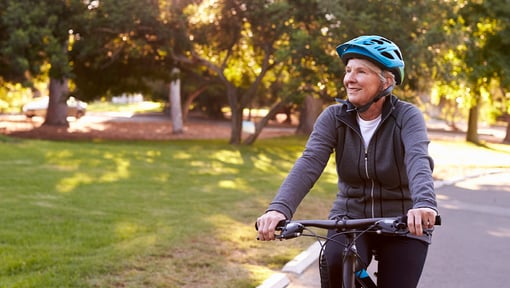
- Choose walking or biking over driving when errands are nearby.
- Start a garden and tend to the yard each week.
- Take an after-dinner walk.
- Keep up with the chores that keep you moving.
- Stand or pace during phone calls.
**7. Practice stress relief rituals.**
The Blue Zones may have a lot figured out when it comes to well-being, but stress does still arise. When it does, these groups turn to grounding stress relief practices to “downshift” and refill their cups. Okinawans pause daily to honor their ancestors. Adventists observe a time of sanctuary for 24 hours on the weekend. Ikarians take a midday nap. Sardinians gather for a “happy hour,” more focused on connection than cocktails. However you choose to downshift, calming rituals are important to your Blue Zone’s foundation.
To make *stress relief* part of your own Blue Zone:
- Enjoy a cup of herbal tea before bed to signal to your mind and body that it’s time to rest. Share this moment with a loved one if you’d like.
- Practice gentle stretching or yoga to wind down whenever you need a break.
- Let yourself have a day of self-care—or maybe even a day spent doing nothing but resting.
- Find a quiet corner that brings you peace and meditate, pray, or journal, whatever feels right to you.

You don’t have to hightail it to a Blue Zone to experience the same benefits these centenarians do. While lifespan is partially written in your genes, much of your potential longevity depends on your lifestyle. The Blue Zone perspectives are centered on [*health span* rather than *lifespan*.](https://www.heart.org/en/news/2025/01/14/what-is-healthspan-and-how-can-you-maximize-yours)
These areas have mapped out a blueprint for longevity because healthy choices are the standard. In fact, they’re really not a choice at all but rather the defaults of daily life. So, while Blue Zones alone are not magical, taking inspiration from their healthy patterns can set you on the path to a longer, healthier life—anywhere in the world.
Not a Silver&Fit® member? Learn more about everything the program has to offer, including more helpful healthy living tips like this, [here on our website](https://www.silverandfit.com/).
*This information is not intended to take the place of regular medical care or advice. Please check with your doctor before using this information or beginning any self-care program. Images used for this article do not depict any members of the Silver&Fit Program.*
**References**
Austad, S. N., & Pes, G. M. (2025). The validity of Blue Zones demography: A response to critiques. *The Gerontologist, 65*(12), Article gnaf246. [https://doi.org/10.1093/geront/gnaf246](https://doi.org/10.1093/geront/gnaf246)
Buettner, D., & Skemp, S. (2016). Blue Zones: Lessons from the world’s longest lived. American Journal of Lifestyle Medicine, 10(5), 318–321. [https://doi.org/10.1177/1559827616637066](https://doi.org/10.1177/1559827616637066)
Candal-Pedreira, C., Martín-Gisbert, L., Teijeiro, A., García, G., Ruano-Ravina, A., & Pérez-Ríos, M. (2025). Blue Zones: An analysis of existing evidence through a scoping review. Aging and Disease. [https://doi.org/10.14336/AD.2025.0461](https://doi.org/10.14336/AD.2025.0461)
Cleveland Clinic. (2024, March 7). Mediterranean diet. [https://my.clevelandclinic.org/health/articles/16037-mediterranean-diet](https://my.clevelandclinic.org/health/articles/16037-mediterranean-diet)
Kochilas, D. (2024, April 2). Chickpea stew with honey-roasted cauliflower & root vegetables. Blue Zones. [https://www.bluezones.com/recipe/chickpea-stew-with-honey-roasted-cauliflower-root-vegetables/](https://www.bluezones.com/recipe/chickpea-stew-with-honey-roasted-cauliflower-root-vegetables/)
Lang, M., Krátký, J., & Xygalatas, D. (2020). The role of ritual behaviour in anxiety reduction: An investigation of Marathi religious practices in Mauritius. Philosophical Transactions of the Royal Society B: Biological Sciences, 375(1805), Article 20190431. [https://doi.org/10.1098/rstb.2019.0431](https://doi.org/10.1098/rstb.2019.0431)
Mayo Clinic. (2023, August 1). Chronic stress puts your health at risk. [https://www.mayoclinic.org/healthy-lifestyle/stress-management/in-depth/stress/art-20046037](https://www.mayoclinic.org/healthy-lifestyle/stress-management/in-depth/stress/art-20046037)
Nelson, J. B. (2017). Mindful eating: The art of presence while you eat. Diabetes Spectrum, 30(3), 171–174. [https://doi.org/10.2337/ds17-0015](https://doi.org/10.2337/ds17-0015)
Olivadese, V. (n.d.). What we can all learn from Italian mealtime culture. National Eating Disorders Association. [https://www.nationaleatingdisorders.org/what-we-can-all-learn-italian-mealtime-culture/](https://www.nationaleatingdisorders.org/what-we-can-all-learn-italian-mealtime-culture/)
Ruddick-Collins, L. C., Johnston, J. D., Morgan, P. J., & Johnstone, A. M. (2018). The big breakfast study: Chrono-nutrition influence on energy expenditure and bodyweight. Nutrition Bulletin, 43(2), 174–183. [https://doi.org/10.1111/nbu.12323](https://doi.org/10.1111/nbu.12323)
Solan, M. (2025, September 1). Living in the Blue Zone. Harvard Health Publishing, Harvard Medical School. [https://www.health.harvard.edu/staying-healthy/living-in-the-blue-zone](https://www.health.harvard.edu/staying-healthy/living-in-the-blue-zone)
Williamson, L. (2025, January 14). What is healthspan, and how can you maximize yours? American Heart Association. [https://www.heart.org/en/news/2025/01/14/what-is-healthspan-and-how-can-you-maximize-yours](https://www.heart.org/en/news/2025/01/14/what-is-healthspan-and-how-can-you-maximize-yours)
This article was written by Celina Johnson, edited by Keleigh Somes, and clinically reviewed by Elizabeth Thompson, RDN, MPH, on March 28, 2026.
[Return to Homepage](https://blog.silverandfit.com/)
## About the Author

### The Silver&Fit® Team at American Specialty Health
The award-winning Silver&Fit® Blog is brought to life by a seasoned team of professionals at American Specialty Health (ASH), an organization with nearly 2 decades of experience in senior wellness programming. The Silver&Fit® blog writers, editors, clinicians, designers, and marketing specialists are dedicated to delivering engaging, informative wellness content. Every article is carefully researched and clinically reviewed for accuracy. Our goal? Content that supports healthy aging through trusted, research-based insights on fitness, nutrition, stress management, and more, tailored specifically for older adults seeking to live more vibrant, active, and healthy lives.
#### Recommended Articles
[](https://blog.silverandfit.com/tag/healthy-aging/green-spaces)
##### [Nature RX: How Green Spaces Protect Your Brain Health](https://blog.silverandfit.com/tag/healthy-aging/green-spaces)
\- September 14, 2026
[](https://blog.silverandfit.com/tag/healthy-aging/antibiotic-resistance)
##### [The Dangers of Antibiotic Resistance](https://blog.silverandfit.com/tag/healthy-aging/antibiotic-resistance)
\- August 17, 2026
[](https://blog.silverandfit.com/tag/healthy-aging/balance-training)
##### [6 Simple Balance Training Exercises to Help Prevent Falls](https://blog.silverandfit.com/tag/healthy-aging/balance-training)
\- June 29, 2026
### Popular Posts
### Get the latest tips from Silver&Fit in your inbox.
### Recent Post
### Recent Posts
[Training for Pickleball: Strength, Balance, and Injury Prevention](https://blog.silverandfit.com/tag/fitness/pickleball-training)
\- 1 June, 2026
[Why Solitude Is as Important to Your Well-Being as Socializing](https://blog.silverandfit.com/tag/lifestyle/solitude)
\- 1 June, 2026
[Nature RX: How Green Spaces Protect Your Brain Health](https://blog.silverandfit.com/tag/healthy-aging/green-spaces)
\- 1 June, 2026
[Fall Morning Muffins for a Cozy Start to Your Day](https://blog.silverandfit.com/tag/nutrition/fall-muffins)
\- 1 June, 2026
[The Gut-Brain Connection and Its Impact on Your Health](https://blog.silverandfit.com/tag/lifestyle/gut-brain-connection)
\- 1 June, 2026
Brought To You By

### Silver&Fit
The Silver&Fit® program provides eligible members with a fitness center membership and options to stay Fit at Home.
-
-
-
-
-
### Topics
- [Nutrition (57)](https://blog.silverandfit.com/tag/nutrition)
- [Healthy Aging (55)](https://blog.silverandfit.com/tag/healthy-aging)
- [Fitness (53)](https://blog.silverandfit.com/tag/fitness)
- [Lifestyle (52)](https://blog.silverandfit.com/tag/lifestyle)
### We've been expertly designing senior fitness programs for nearly 20 years. Now, we're excited to share the health in our blog, free and available to the public. Interested? Get the latest fitness, healthy aging, lifestyle, and nutrition tips in your inbox!
SUBSCRIBE
[Facebookfacebook](https://www.facebook.com/SilverandFit) [Instagraminstagram](https://www.instagram.com/silverandfit/?hl=en) [youtube](https://www.youtube.com/user/silverandfit) [Pinterestpinterest](https://pinterest.com/silverandfit) [LinkedInlinkedin](https://www.linkedin.com/company/american-specialty-health)
- Useful Links
- [About Us](https://www.silverandfit.com/About)
- [Terms & Conditions](https://www.silverandfit.com/TermsAndConditions)
- [Privacy Statement](https://www.silverandfit.com/Privacy)
- [FAQ](https://www.silverandfit.com/FAQ)
- [Site Map](https://www.silverandfit.com/sitemap)
## Connect
[Contact Us](https://www.silverandfit.com/contactus)
## Language Assistance
The following PDF files will open in a new window. You must have [Adobe ReaderOpens an external site in a new tab](https://acrobat.adobe.com/us/en/acrobat/pdf-reader.html) installed to view the files.
- [English](https://blog.silverandfit.com/hubfs/SF%20Linked%20Files/M950-1031A%20Language%20Support_tcm26-161058.pdf)
- [Español](https://blog.silverandfit.com/hubfs/SF%20Linked%20Files/M950-1031A%20Language%20Support_tcm26-161058.pdf)
- [繁體中文](https://blog.silverandfit.com/hubfs/SF%20Linked%20Files/M950-1031A%20Language%20Support_tcm26-161058.pdf)
- [Tagalog](https://blog.silverandfit.com/hubfs/SF%20Linked%20Files/M950-1031A%20Language%20Support_tcm26-161058.pdf)
- [Tiếng Việt](https://blog.silverandfit.com/hubfs/SF%20Linked%20Files/M950-1031A%20Language%20Support_tcm26-161058.pdf)
- [العربية](https://blog.silverandfit.com/hubfs/SF%20Linked%20Files/M950-1031A%20Language%20Support_tcm26-161058.pdf)
- [Français](https://blog.silverandfit.com/hubfs/SF%20Linked%20Files/M950-1031A%20Language%20Support_tcm26-161058.pdf)
- [한국어](https://blog.silverandfit.com/hubfs/SF%20Linked%20Files/M950-1031A%20Language%20Support_tcm26-161058.pdf)
- [Русский](https://blog.silverandfit.com/hubfs/SF%20Linked%20Files/M950-1031A%20Language%20Support_tcm26-161058.pdf)
- [Deutsch](https://blog.silverandfit.com/hubfs/SF%20Linked%20Files/M950-1031A%20Language%20Support_tcm26-161058.pdf)
- [Kreyòl Ayisyen](https://blog.silverandfit.com/hubfs/SF%20Linked%20Files/M950-1031A%20Language%20Support_tcm26-161058.pdf)
- [हिंदी](https://blog.silverandfit.com/hubfs/SF%20Linked%20Files/M950-1031A%20Language%20Support_tcm26-161058.pdf)
- [Português](https://blog.silverandfit.com/hubfs/SF%20Linked%20Files/M950-1031A%20Language%20Support_tcm26-161058.pdf)
- [Italiano](https://blog.silverandfit.com/hubfs/SF%20Linked%20Files/M950-1031A%20Language%20Support_tcm26-161058.pdf)
- [Polski](https://blog.silverandfit.com/hubfs/SF%20Linked%20Files/M950-1031A%20Language%20Support_tcm26-161058.pdf)
- [اُردُو](https://blog.silverandfit.com/hubfs/SF%20Linked%20Files/M950-1031A%20Language%20Support_tcm26-161058.pdf)
- [אידיש](https://blog.silverandfit.com/hubfs/SF%20Linked%20Files/M950-1031A%20Language%20Support_tcm26-161058.pdf)
- [বাংলা](https://blog.silverandfit.com/hubfs/SF%20Linked%20Files/M950-1031A%20Language%20Support_tcm26-161058.pdf)
- [Ελληνικά](https://blog.silverandfit.com/hubfs/SF%20Linked%20Files/M950-1031A%20Language%20Support_tcm26-161058.pdf)
- [Shqiptar](https://blog.silverandfit.com/hubfs/SF%20Linked%20Files/M950-1031A%20Language%20Support_tcm26-161058.pdf)
Newtab\_Icon Clicking on these links will take you away from Silverandfit.com. Silver&Fit is not responsible for any content or the privacy practices of external websites.
The Silver&Fit program is a product of American Specialty Health Fitness, Inc. (ASH Fitness), a subsidiary of American Specialty Health Incorporated. ASH Fitness complies with applicable federal civil rights laws and does not discriminate on the basis of race, color, national origin, age, disability, or sex.
© 2020-2025 American Specialty Health Incorporated (ASH). All Rights Reserved.
Last Updated 11/2025