---
title: Online or Face-to-Face? Navigating Social Connections
description: To thrive after joint replacement surgery, follow these steps prior to surgery. Prepare your home, keep up healthy habits such as exercise (as best you can), and learn what to expect during recovery.
image: https://blog.silverandfit.com/hubfs/SF%20Blog/Article%20Images/Blog%20191%20-%20Creative%20Spark/Lifestyle_Online_or_Face-to-Face_Social_Connections.png
---
[LOG IN](https://www.silverandfit.com/identity/login) [Check Eligibility](https://www.silverandfit.com/identity/registration)
- [HOMEPAGE](https://www.silverandfit.com/)
- [WELL-BEING CLUB](https://www.silverandfit.com/well-being-club)
- [FITNESS CENTERS](https://www.silverandfit.com/search)
- FIT AT HOME
- [Workouts](https://www.silverandfit.com/workouts)
- [Home Kits](https://www.silverandfit.com/home-kits)
- [PARTICIPATING HEALTH PLANS](https://www.silverandfit.com/health-plans)
- [HOW IT WORKS](https://www.silverandfit.com/how-it-works)
- [FAQ](https://www.silverandfit.com/faq)
- [BLOG](https://blog.silverandfit.com/)
### Topics
- Select a Topic
### Get the latest tips in your inbox
SUBSCRIBE

By providing your email you consent to receiving updates to the Silver&Fit blog by email. Silver&Fit does not share or sell your email to any third-parties. You may unsubscribe at any time by clicking the link at the bottom of the email.
[Healthy Aging](https://blog.silverandfit.com/tag/healthy-aging)
# Online or Face-to-Face? Navigating Social Connections

By [The Silver&Fit® Team at American Specialty Health](https://blog.silverandfit.com/author/american-specialty-health) on February 16, 2026
[](http://www.facebook.com/sharer/sharer.php?u=https://blog.silverandfit.com/tag/healthy-aging/social-connections) [](https://twitter.com/home?status=Online%20or%20Face-to-Face?%20Navigating%20Social%20Connections+https://blog.silverandfit.com/tag/healthy-aging/social-connections) [](http://www.linkedin.com/shareArticle?mini=true&url=https://blog.silverandfit.com/tag/healthy-aging/social-connections) [](mailto:?body=https://blog.silverandfit.com/tag/healthy-aging/social-connections)

Whether you get together in person or virtually, staying socially connected is an important part of healthy aging. But is one better than the other?
Humans are inherently social creatures. Whether it’s a hug, a shared laugh over coffee, or saying hi to a neighbor, we thrive on being together. Now, thanks to video calls, instant messaging, and social media (among other outlets), you can talk to friends and family anywhere in the world. But how does an online connection compare to a good old-fashioned face-to-face? Does one have more of an impact on your well-being than the other?

**Why social connections matter—especially for older adults **
Having an active social life in later years comes with more perks than you might realize. And it’s more than just the enjoyment you get from being with others. Studies have shown that it can boost your mental, emotional, and even physical health:
- **Mental health benefits.** Regular interaction with others helps keep your brain stimulated. This can lower the risk of memory loss and cognitive decline. Many social activities involve problem-solving, storytelling, and deep emotional engagement. These are all great mental workouts.
- **Emotional health benefits.** Socializing combats loneliness and depression. These are real struggles for a lot of older adults. Building meaningful relationships helps provide emotional support and a sense of belonging. These connections are crucial if you ever find yourself in a time of need.
- **Physical health benefits.** People with more active social lives tend to be more *physically* active, as well. And in general, you may be less likely to lead a sedentary lifestyle. You may be more motivated to take part in healthier activities, like dancing or group fitness classes.
[Looking for ways to reconnect with old friends—or meet new ones? Check out our tips for building meaningful relationships.](https://blog.silverandfit.com/how-to-build-close-relationships-with-friends-both-new-and-old)
**The surge of virtual socializing **
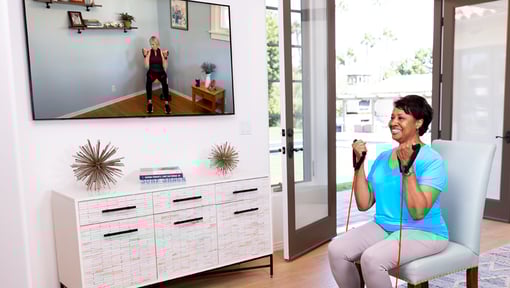
The pandemic made in-person gatherings a genuine health risk. This left a lot of people feeling lonelier than ever, especially older adults. In turn, a lot of people embraced online meetings and virtual programs for the first time. Senior centers leaned into these ideas as well. Things like streaming fitness classes and online clubs became unique ways to connect with others. These efforts helped a lot of people avoid isolation during tough times.
Even after pandemic restrictions eased up, many older adults continued to use these virtual platforms. People enjoyed the ease of use, especially those with mobility challenges. And for those with families far away, keeping in touch was easier than ever.
**Virtual vs. in-person social connections **
Any type of socialization is better than none. However, studies show that although online activities can help with loneliness, they may not match the emotional connections of face-to-face communication.
Both have their pros and cons. Replacing in-person meetings with virtual ones may be a practical solution, but does it come at the risk of limiting that all-important human connection? Let’s take a closer look.
**Emotional depth and human presence **
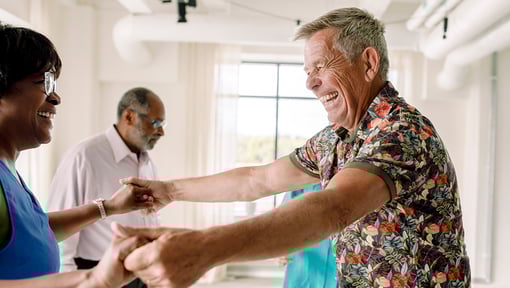
Being with others in person can give you an emotional experience that’s tough to match virtually. Think of all the nonverbal ways you might interact when you’re with someone in person—things like facial expressions, body language, and eye contact. These simply don’t always carry the same weight over a screen. A smartphone is no match for a shared laugh at the kitchen table or a warm embrace.
Virtual socializing may be easy, but it can feel less personal. Video calls might be hard to follow if the picture is small, blurry, or if there are other distractions. Texting is quick and easy, but it can lead to misunderstandings without the right tone or context.
**Accessibility and inclusivity **
One of the best features of virtual socializing is that you can talk with people anywhere in the world. With just a few taps, you can instantly connect with friends and family. And smartphones can help bridge the gap for individuals with mobility challenges or social anxiety.
While in-person meetups can carry more weight, they’re not always easy to make happen. You may be constrained by location, time, and logistics. So, organizing a meetup might require a little more planning to make it happen. You may even have to travel. And that could mean extra costs. For those with limited funds or a busy schedule, virtual socializing can be a lifeline.
**Convenience vs. engagement **
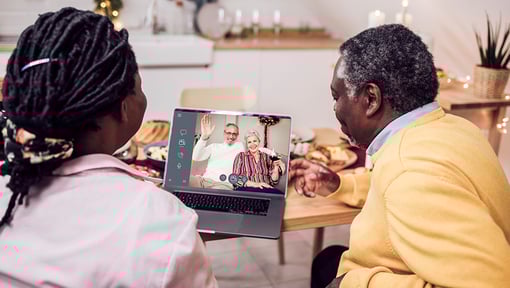
There’s no doubt that meeting virtually is easier than meeting in person. You can join a group chat from your couch, attend a virtual event in your pajamas, or multitask during a video call. This allows for more frequent and casual meetups.
But that convenience can come at the cost of engagement. When you talk with someone in person, you’re more likely to give your full attention. You’re more present. You're also less likely to be distracted by notifications popping up on your phone. Even background distractions can take away your attention during a virtual connection.
Giving your full attention tends to lead to more meaningful conversations and deeper connections. Some people find it hard to match this feeling in a virtual chat.
**Social comfort and expression **
For many, a virtual meeting may feel like a safer space than talking in person. The screen can act as a buffer. It gives you more time to think before you respond, so you don’t have to worry about quick reactions. This can help people who feel shy or nervous around others feel more comfortable sharing their thoughts.
If you’re struggling to find ways to connect with others, [here are 6 steps you can take to do so](https://blog.silverandfit.com/tag/healthy-aging/loneliness-isolation).
On the other hand, in-person socializing encourages spontaneity and vulnerability. It can also foster growth and deepen relationships. Real-time feedback and shared experiences often lead to more authentic connections.
**Finding the right balance **
At the end of the day, there is no right or wrong way to be social. Ultimately, the key here is balance. Interacting with friends and family in *any* way is a vital part of healthy aging. Be it a phone call, video chat, or a face-to-face visit, find a way to make it happen. You’ll reap health rewards by staying in touch with others, no matter if those connections are in-person or virtual.

Not a Silver&Fit® member? Learn more about everything the program has to offer, including more helpful healthy living tips like this, [here on our website](https://www.silverandfit.com/).
*This information is not intended to take the place of regular medical care or advice. Please check with your doctor before using this information or beginning any self-care program. Images used for this article do not depict any members of the Silver&Fit Program.*
**References**
Finlay, J., Meltzer, G., O'Shea, B., & Kobayashi, L. (2024). Altered place engagement since COVID-19: A multi-method study of community participation and health among older Americans. Wellbeing, Space and Society, 6, Article 100184. [https://doi.org/10.1016/j.wss.2024.100184](https://doi.org/10.1016/j.wss.2024.100184)
Hueluer, G., Macdonald, B., & Luo, M. (2021). Daily social interactions and well-being in older adults: The role of interaction modality, Innovation in Aging, 5(Suppl. 1), S579. [ https://doi.org/10.1093/geroni/igab046.2223](https://doi.org/10.1093/geroni/igab046.2223)
Janssen, J. H. M., van Tilburg, T. G., van Ingen, E. J., Corten, R., & Peeters, G. M. E. E. G. (2025). Social connectedness in older adults: The potential of social internet use to maintain a strong and stable personal network. The Journals of Gerontology: Psychological Sciences and Social Sciences, 80(4), Article gbaf014. [https://doi.org/10.1093/geronb/gbaf014](https://doi.org/10.1093/geronb/gbaf014)
Rook, K., & Charles, S. (2017). Close social ties and health in later life: Strengths and vulnerabilities. *The American Psychologist, 72*(6), 567-577. [https://doi.org/10.1037/amp0000104](https://doi.org/10.1037/amp0000104)
Seldman, G. (2022, September 6). How do digital and in-person interactions affect wellbeing? Psychology Today. [https://www.psychologytoday.com/us/blog/close-encounters/202209/how-do-digital-and-in-person-interactions-affect-wellbeing](https://www.psychologytoday.com/us/blog/close-encounters/202209/how-do-digital-and-in-person-interactions-affect-wellbeing)
U.S. Department of Health and Human Services, Office of the Surgeon General. (2025, January 20). Let’s plant the seeds of change. [https://www.hhs.gov/surgeongeneral/reports-and-publications/connection/resources/index.html](https://www.hhs.gov/surgeongeneral/reports-and-publications/connection/resources/index.html)
This article was written by Jason Nielsen, edited by Keleigh Somes, and clinically reviewed by Elizabeth Thompson, MPH, RDN, on November 15, 2025.
[Return to Homepage](https://blog.silverandfit.com/)
## About the Author

### The Silver&Fit® Team at American Specialty Health
The award-winning Silver&Fit® Blog is brought to life by a seasoned team of professionals at American Specialty Health (ASH), an organization with nearly 2 decades of experience in senior wellness programming. The Silver&Fit® blog writers, editors, clinicians, designers, and marketing specialists are dedicated to delivering engaging, informative wellness content. Every article is carefully researched and clinically reviewed for accuracy. Our goal? Content that supports healthy aging through trusted, research-based insights on fitness, nutrition, stress management, and more, tailored specifically for older adults seeking to live more vibrant, active, and healthy lives.
#### Recommended Articles
[](https://blog.silverandfit.com/tag/healthy-aging/balance-training)
##### [6 Simple Balance Training Exercises to Help Prevent Falls](https://blog.silverandfit.com/tag/healthy-aging/balance-training)
- June 29, 2026
[](https://blog.silverandfit.com/tag/healthy-aging/brain-fitness)
##### [Pursue Lifelong Learning for Brain Fitness](https://blog.silverandfit.com/tag/healthy-aging/brain-fitness)
- June 15, 2026
[](https://blog.silverandfit.com/tag/healthy-aging/blue-zones)
##### [Longevity Lessons From the “Blue Zones”](https://blog.silverandfit.com/tag/healthy-aging/blue-zones)
- June 1, 2026
### Popular Posts
### Get the latest tips from Silver&Fit in your inbox.
### Recent Post
### Recent Posts
[6 Simple Balance Training Exercises to Help Prevent Falls](https://blog.silverandfit.com/tag/healthy-aging/balance-training)
- 16 February, 2026
[Pack in the Protein With Easy-to-Make Grain Bowls](https://blog.silverandfit.com/tag/nutrition/grain-bowls)
- 16 February, 2026
[Pursue Lifelong Learning for Brain Fitness](https://blog.silverandfit.com/tag/healthy-aging/brain-fitness)
- 16 February, 2026
[How to Keep Relationships Healthy As You Age](https://blog.silverandfit.com/tag/lifestyle/healthy-relationships)
- 16 February, 2026
[Longevity Lessons From the “Blue Zones”](https://blog.silverandfit.com/tag/healthy-aging/blue-zones)
- 16 February, 2026
Brought To You By

### Silver&Fit
The Silver&Fit® program provides eligible members with a fitness center membership and options to stay Fit at Home.
-
-
-
-
-
### Topics
- [Nutrition (54)](https://blog.silverandfit.com/tag/nutrition)
- [Healthy Aging (53)](https://blog.silverandfit.com/tag/healthy-aging)
- [Fitness (51)](https://blog.silverandfit.com/tag/fitness)
- [Lifestyle (49)](https://blog.silverandfit.com/tag/lifestyle)
### We've been expertly designing senior fitness programs for nearly 20 years. Now, we're excited to share the health in our blog, free and available to the public. Interested? Get the latest fitness, healthy aging, lifestyle, and nutrition tips in your inbox!
SUBSCRIBE
[Facebookfacebook](https://www.facebook.com/SilverandFit) [Instagraminstagram](https://www.instagram.com/silverandfit/?hl=en) [youtube](https://www.youtube.com/user/silverandfit) [Pinterestpinterest](https://pinterest.com/silverandfit) [LinkedInlinkedin](https://www.linkedin.com/company/american-specialty-health)
- Useful Links
- [About Us](https://www.silverandfit.com/About)
- [Terms & Conditions](https://www.silverandfit.com/TermsAndConditions)
- [Privacy Statement](https://www.silverandfit.com/Privacy)
- [FAQ](https://www.silverandfit.com/FAQ)
- [Site Map](https://www.silverandfit.com/sitemap)
## Connect
[Contact Us](https://www.silverandfit.com/contactus)
## Language Assistance
The following PDF files will open in a new window. You must have [Adobe ReaderOpens an external site in a new tab](https://acrobat.adobe.com/us/en/acrobat/pdf-reader.html) installed to view the files.
- [English](https://blog.silverandfit.com/hubfs/SF%20Linked%20Files/M950-1031A%20Language%20Support_tcm26-161058.pdf)
- [Español](https://blog.silverandfit.com/hubfs/SF%20Linked%20Files/M950-1031A%20Language%20Support_tcm26-161058.pdf)
- [繁體中文](https://blog.silverandfit.com/hubfs/SF%20Linked%20Files/M950-1031A%20Language%20Support_tcm26-161058.pdf)
- [Tagalog](https://blog.silverandfit.com/hubfs/SF%20Linked%20Files/M950-1031A%20Language%20Support_tcm26-161058.pdf)
- [Tiếng Việt](https://blog.silverandfit.com/hubfs/SF%20Linked%20Files/M950-1031A%20Language%20Support_tcm26-161058.pdf)
- [العربية](https://blog.silverandfit.com/hubfs/SF%20Linked%20Files/M950-1031A%20Language%20Support_tcm26-161058.pdf)
- [Français](https://blog.silverandfit.com/hubfs/SF%20Linked%20Files/M950-1031A%20Language%20Support_tcm26-161058.pdf)
- [한국어](https://blog.silverandfit.com/hubfs/SF%20Linked%20Files/M950-1031A%20Language%20Support_tcm26-161058.pdf)
- [Русский](https://blog.silverandfit.com/hubfs/SF%20Linked%20Files/M950-1031A%20Language%20Support_tcm26-161058.pdf)
- [Deutsch](https://blog.silverandfit.com/hubfs/SF%20Linked%20Files/M950-1031A%20Language%20Support_tcm26-161058.pdf)
- [Kreyòl Ayisyen](https://blog.silverandfit.com/hubfs/SF%20Linked%20Files/M950-1031A%20Language%20Support_tcm26-161058.pdf)
- [हिंदी](https://blog.silverandfit.com/hubfs/SF%20Linked%20Files/M950-1031A%20Language%20Support_tcm26-161058.pdf)
- [Português](https://blog.silverandfit.com/hubfs/SF%20Linked%20Files/M950-1031A%20Language%20Support_tcm26-161058.pdf)
- [Italiano](https://blog.silverandfit.com/hubfs/SF%20Linked%20Files/M950-1031A%20Language%20Support_tcm26-161058.pdf)
- [Polski](https://blog.silverandfit.com/hubfs/SF%20Linked%20Files/M950-1031A%20Language%20Support_tcm26-161058.pdf)
- [اُردُو](https://blog.silverandfit.com/hubfs/SF%20Linked%20Files/M950-1031A%20Language%20Support_tcm26-161058.pdf)
- [אידיש](https://blog.silverandfit.com/hubfs/SF%20Linked%20Files/M950-1031A%20Language%20Support_tcm26-161058.pdf)
- [বাংলা](https://blog.silverandfit.com/hubfs/SF%20Linked%20Files/M950-1031A%20Language%20Support_tcm26-161058.pdf)
- [Ελληνικά](https://blog.silverandfit.com/hubfs/SF%20Linked%20Files/M950-1031A%20Language%20Support_tcm26-161058.pdf)
- [Shqiptar](https://blog.silverandfit.com/hubfs/SF%20Linked%20Files/M950-1031A%20Language%20Support_tcm26-161058.pdf)
Newtab\_Icon Clicking on these links will take you away from Silverandfit.com. Silver&Fit is not responsible for any content or the privacy practices of external websites.
The Silver&Fit program is a product of American Specialty Health Fitness, Inc. (ASH Fitness), a subsidiary of American Specialty Health Incorporated. ASH Fitness complies with applicable federal civil rights laws and does not discriminate on the basis of race, color, national origin, age, disability, or sex.
© 2020-2025 American Specialty Health Incorporated (ASH). All Rights Reserved.
Last Updated 11/2025