Get ready for a new twist on your salad! This unique recipe blends savory with sweet and creamy with crunchy for a delightful flavor adventure.
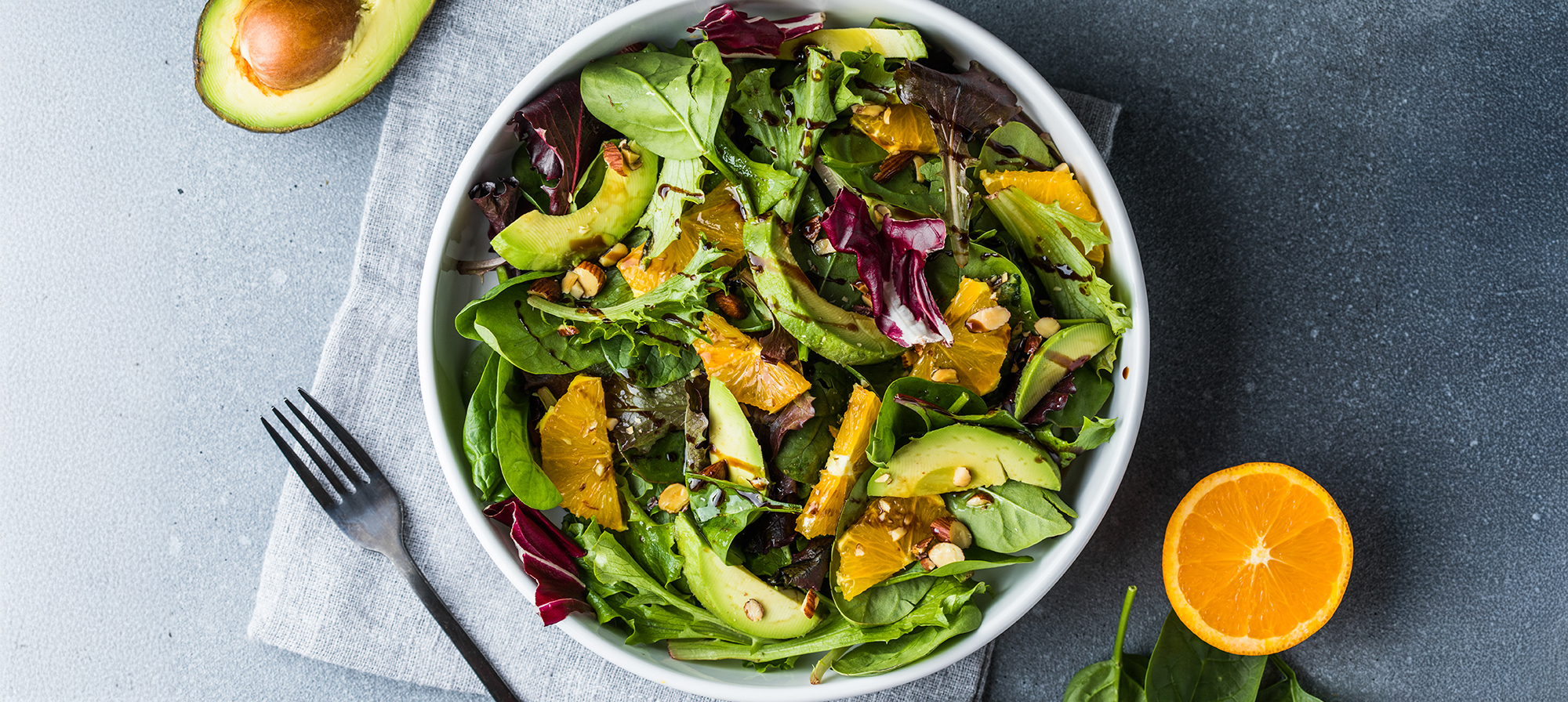
Spring is just around the corner, and the produce aisle is looking more vibrant and colorful each day. What better time to start adding fresh new salads to your meal plan? This tasty recipe is a winner. It blends the citrusy sweet flavor of oranges with the rich, creamy texture of avocado. Tossed with fresh spinach, ripe tomatoes, crunchy slivered almonds, and red onion slices, this salad is a refreshing and nutritious treat.
Let’s check out the recipe first, then take a deeper look at the health-enhancing nutrients in the ingredients.
Orange, Avocado, and Spinach Salad with Honey-Citrus Dressing
Ingredients
- 3 medium-sized oranges
- 1 tsp. canola oil
- 1 tsp. honey
- ⅛ tsp. salt
- 1 medium-sized avocado, peeled and diced
- 1 medium-sized tomato, cut into wedges
- ¼ cup red onion, thinly sliced
- 2 cups fresh spinach, chopped
- 1 Tbsp. unsalted slivered almonds, toasted
Directions
Make the dressing:
-
Extract juice from one of the oranges and set aside.
-
Pour one tablespoon of the orange juice into a small bowl. Add the oil, honey, and salt, and mix well. Set the dressing aside.
Mix the salad:
-
Peel and section the remaining 2 oranges.
-
Combine the orange sections, avocado, tomato, onion, spinach, and almonds in a large bowl.
-
Stir in the dressing and toss well. Serve and enjoy!
Yield: 2 servings
Prep Time: 20 minutes
Difficulty: Easy
| Nutrition Facts |
| Calories 364 |
| Fat calories 137 |
| Total fat 15.3g |
| Saturated fat 1.8g |
| Cholesterol 0mg |
| Sodium 179.5mg |
| Total carbohydrate 37g |
| Dietary fiber 11.2g |
| Sugars 23.5g |
| Protein 5.4g |
An array of health-giving nutrients packed into one easy recipe
Check out the many nutrients packed into this sweet and creamy salad recipe, along with their health perks.
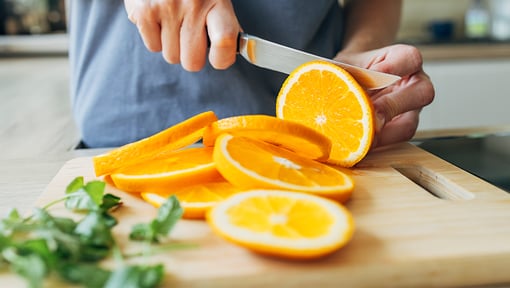
Oranges
Citrus fruits, such as oranges and grapefruit, are loaded with these vitamins and minerals:
-
Vitamin C. This vitamin has been shown to help prevent inflammation and help joints work well. It’s also thought to help support better immune function.
-
Vitamin A. This antioxidant helps protect your cells from the kind of free radical damage (damage to your cells from unstable molecules) that may increase the risk of cancer, heart disease, and other health conditions.
-
Calcium. This helps prevent bone mineral loss, which can lead to weak, brittle bones. But that’s not all. This must-have mineral plays other critical roles in many key functions of your body. It helps keep your blood vessels working well. It helps your blood clot and supports healthy nerve function. It helps your body release hormones. And it helps your muscles contract and relax, including your heart muscle.
Avocado
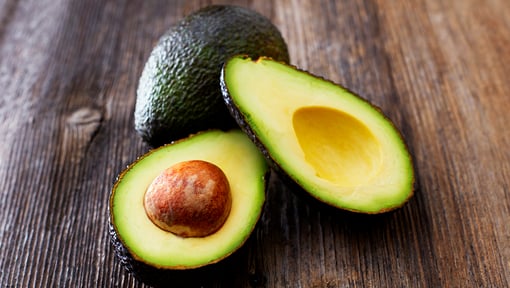
One of the main ingredients in this salad is the savory and buttery-tasting avocado. This warm-climate fruit is packed with a wide array of nutrients and is also notably high in healthy, monounsaturated fat. This fat may help promote healthy cholesterol levels by improving the quality of LDL (bad) cholesterol. This, in turn, may help protect against heart disease. Your body also needs monounsaturated fat to build and support the health of your cells.
Besides healthy fats, avocados are a great source of many other nutrients. In fact, their nutrient profile is quite complex. Here’s a quick look at the ones that have starring roles in avocados—and how they help support your health:
-
Fiber may help support healthy cholesterol and blood sugar levels.
-
Potassium supports muscle and nerve function, as well as regulates your heart rate and blood pressure.
-
Vitamin B9 (folate) helps form blood cells and supports cell growth and function.
-
Vitamin B6 plays several roles in the body. It helps boost the production of serotonin, which can improve sleep and lessen depression and anxiety. It also helps make red blood cells, which, in turn, carry oxygen to all the tissues of your body. It has other important functions as well.
-
Vitamin K helps your blood clot and plays a role in building strong bones.
-
Vitamin C supports your immune system and is needed to build muscle, cartilage, and blood vessels.
-
Vitamin E strengthens your immune system and helps prevent the formation of blood clots. Some findings also suggest it acts as an antioxidant by helping curb free radical damage to the body’s cells.
Spinach
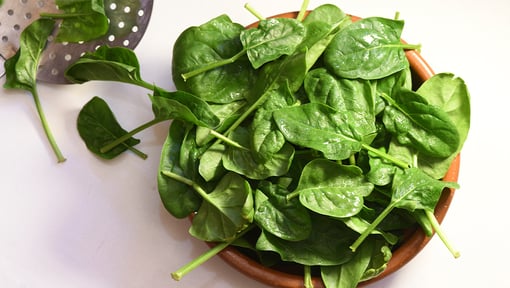
This dark leafy green is a superstar among veggies. Findings suggest it may help bolster eye health, lower the risk of cancer, and support healthy blood pressure. These and other perks come from some of the vitamins that are also abundant in oranges and avocados—vitamins A, C, and K.
Spinach is also packed with minerals such as potassium, phosphorus, calcium, and iron. Potassium is an electrolyte that supports nerve function and helps your muscles contract. It also helps counter some of the harmful effects of too much sodium in the diet. Phosphorus and calcium both help keep your bones strong. And pairing the plant-based iron with the vitamin C that is abundant in this salad helps your body absorb more of the iron .
Tomatoes
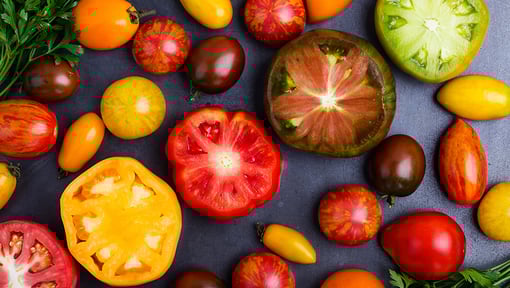
Tomatoes, besides being sweet and juicy, are loaded with vitamins C, A, B9 (folate), and K, as well as potassium. These nutrients are also found in the oranges, avocados, and spinach that are included in this salad. Tomatoes are also bursting with the antioxidant lycopene, which research suggests may help lower the risk of certain cancers . Lycopene also helps support healthy cholesterol levels and slow the formation of artery-stiffening plaque. These health perks, in turn, help support your blood vessel and heart health.
Red onions
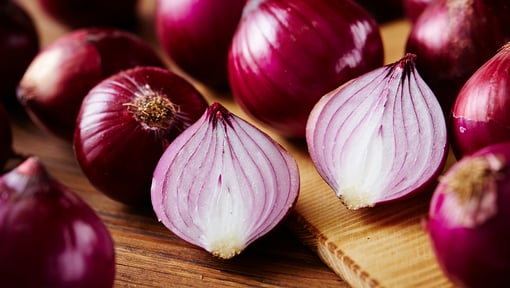
Red onions give a spicy, crunchy blast of flavor without salt. Antioxidants in red onions, such as quercetin and vitamin C, may help lower inflammation and protect your cells against free radical damage. And while more research is needed, one study found that quercetin may play a role in keeping blood sugar in healthy ranges .
 Almonds
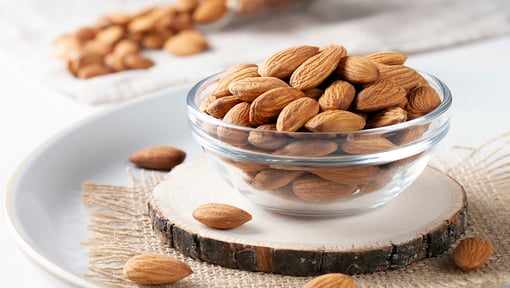
Almonds add the finishing nutritional touch to this salad. Almonds are high in polyunsaturated and monounsaturated fats, which can support healthy cholesterol levels. They’re packed with fiber and protein. And they’re high in vitamin E, which is a powerful antioxidant that helps support the growth and function of your cells.
Is your mouth watering yet? If so, don’t wait! Put this refreshing and nutrient-rich orange, avocado, and spinach salad on your menu soon. You’ll get a delicious and bountiful plateful of vitamins and minerals with a host of health-bolstering benefits.
Not a Silver&Fit® member? Learn more about everything the program has to offer, including more helpful healthy living tips like this, here on our website.
This information is not intended to take the place of regular medical care or advice. Please check with your doctor before using this information or beginning any self-care program. Images used for this article do not depict any members of the Silver&Fit program.
References
Abdullah, M., Jamil, R. T., & Attia, F. N. (2023). Vitamin C (ascorbic acid). StatPearls Publishing. https://www.ncbi.nlm.nih.gov/books/NBK499877/
Alhabeeb, H., Sohouli, M. H., Lari, A., Fatahi, S., Shidfar, F., Alomar, O., Salem, H., Al-Badawi, I. A., Abu-Zaid, A. (2022). Impact of orange juice consumption on cardiovascular disease risk factors: A systematic review and meta-analysis of randomized-controlled trials. Critical Reviews in Food Science and Nutrition, 62(12), 3389-3402. https://doi.org/10.1080/10408398.2020.1865263
Aronson, D., & Kimmel, D. (n.d.). Nuts & seeds: Ancient foods that are still nutritional gems today. North American Vegetarian Society. https://navs-online.org/articles/nuts-seeds/
Balakrishna, R., Bjørnerud, T., Bemanian, M., Aune, D., & Fadnes, L. T. (2022). Consumption of nuts and seeds and health outcomes including cardiovascular disease, diabetes and metabolic disease, cancer, and mortality: An umbrella review. Advances in Nutrition, 13(6). https://doi.org/10.1093/advances/nmac077
Balali, A., Fathzadeh, K., Askari, G., & Sadeghi, O. (2025). Dietary intake of tomato and lycopene, blood levels of lycopene, and risk of total and specific cancers in adults: A systematic review and dose-response meta-analysis of prospective cohort studies. Frontiers in Nutrition,12, Article 1516048. https://doi.org/10.3389/fnut.2025.1516048
Bondonno, N. P., Davey, R. J., Murray, K., Radavelli-Bagatini, S., Bondonno, C. P., Blekkenhorst, L. C., Sim, M., Magliano, D. J., Daly, R. M., Shaw, J. E., Lewis, J. R., & Hodgson, J. M. (2021). Associations between fruit Intake and risk of diabetes in the AusDiab Cohort. The Journal of Clinical Endocrinology and Metabolism, 27, 106(10), e4097-e4108. https://doi.org/10.1210/clinem/dgab335
California Department of Education. (2025, October 2). Oranges. https://www.cde.ca.gov/ls/nu/fd/oranges.asp
Cleveland Clinic. (2025, August 15). Why avocados are so good for you. Cleveland Clinic Health Essentials. https://health.clevelandclinic.org/why-avocados-are-a-healthy-addition-to-your-diet/
Cleveland Clinic. (2020, November 12). Kale vs. spinach: Which is heart-healthier? Cleveland Clinic Health Essentials. https://health.clevelandclinic.org/kale-vs-spinach-which-is-heart-healthier/
Cleveland Clinic. (2022, December 30). The 7 top benefits of vitamin B6. Cleveland Clinic Health Essentials. https://health.clevelandclinic.org/vitamin-b6/
Cleveland Clinic. (2024, February 16). 7 reasons you should eat more spinach. Cleveland Clinic Health Essentials. https://health.clevelandclinic.org/benefits-of-spinach
Cleveland Clinic. (2024, October 11). Phosphorus: The bone fortifier. Cleveland Clinic Health Essentials. https://health.clevelandclinic.org/health-benefits-of-phosphorus
Eid, H. M., & Haddad, P. S. (2017). The antidiabetic potential of quercetin: Underlying mechanisms. Current Medicinal Chemistry, 24(4), 355-364. https://doi.org/10.2174/0929867323666160909153707
Harvard T. H. Chan School of Public Health. (2022, April). Avocados. The Nutrition Source. https://www.hsph.harvard.edu/nutritionsource/avocados/
Harvard T. H. Chan School of Public Health. (2023, March). Vitamin K. The Nutrition Source. https://www.hsph.harvard.edu/nutritionsource/vitamin-k/
Harvard T. H. Chan School of Public Health. (2025, February 20). Vitamin E. The Nutrition Source. https://www.hsph.harvard.edu/nutritionsource/vitamin-e/
Hendley, J. (2025, February 4). Calcium-rich foods: How to boost your intake of this important mineral. Harvard Health Medical School, Harvard Health Publishing. https://www.health.harvard.edu/nutrition/calcium-rich-foods-how-to-boost-your-intake-of-this-important-mineral
Lorenc, C. (2025, February 3). Iron and vitamin C: The perfect pair. Michigan State University Extension. https://www.canr.msu.edu/news/iron_and_vitamin_c_the_perfect_pair
Mayo Clinic. (2024, May 2). Cholesterol: Top foods to improve your numbers. https://www.mayoclinic.org/diseases-conditions/high-blood-cholesterol/in-depth/cholesterol/art-20045192
Mayo Clinic. (2025, April 17). Vitamin A. https://www.mayoclinic.org/drugs-supplements-vitamin-a/art-20365945
Mayo Clinic. (2025, August 14). Vitamin C. https://www.mayoclinic.org/drugs-supplements-vitamin-c/art-20363932
Mayo Clinic. (2025, August 15). Folate (folic acid). https://www.mayoclinic.org/drugs-supplements-folate/art-20364625
Mayo Clinic. (2025, November 7). Dietary fiber: Essential for a healthy diet. https://www.mayoclinic.org/healthy-lifestyle/nutrition-and-healthy-eating/in-depth/fiber/art-20043983
MedlinePlus. (2021, November 19). Potassium. U.S. Department of Health and Human Services, National Institutes of Health, National Library of Medicine. https://medlineplus.gov/potassium.html
Salazar-Lopez, N. J., Dominguez-Avila, J. A., Yahia, E. M., Belmote-Herrera, B. H., Wall-Medrano, A., Montalvo-Gonzalez, E., & Gonzalez-Aguilar, G. A. (2020). Avocado fruit and by-products as potential sources of bioactive compounds. Food Research International, 138(Pt A), Article 109774. https://doi.org/10.1016/j.foodres.2020.109774
Swartzendruber, K. (2018, July 17). Tomatoes provide many health benefits. Michigan State University Extension. https://www.canr.msu.edu/news/tomatoes_provide_many_health_benefits
U.S. Department of Agriculture. (2024, October 31). Avocados, Hass, peeled, raw. Food Data Central. https://fdc.nal.usda.gov/food-details/2710824/nutrients
U.S. Department of Agriculture. (2020, April 1). Onions, red, raw. Food Data Central. https://fdc.nal.usda.gov/food-details/790577/nutrients
U.S. Department of Agriculture. (2021, October 28). Spinach, mature. Food Data Central. https://fdc.nal.usda.gov/food-details/1999633/nutrients
This article was written by Gail Olson, edited by Keleigh Somes, and clinically reviewed by Elizabeth Thompson, MPH, RDN, on December 17, 2025.