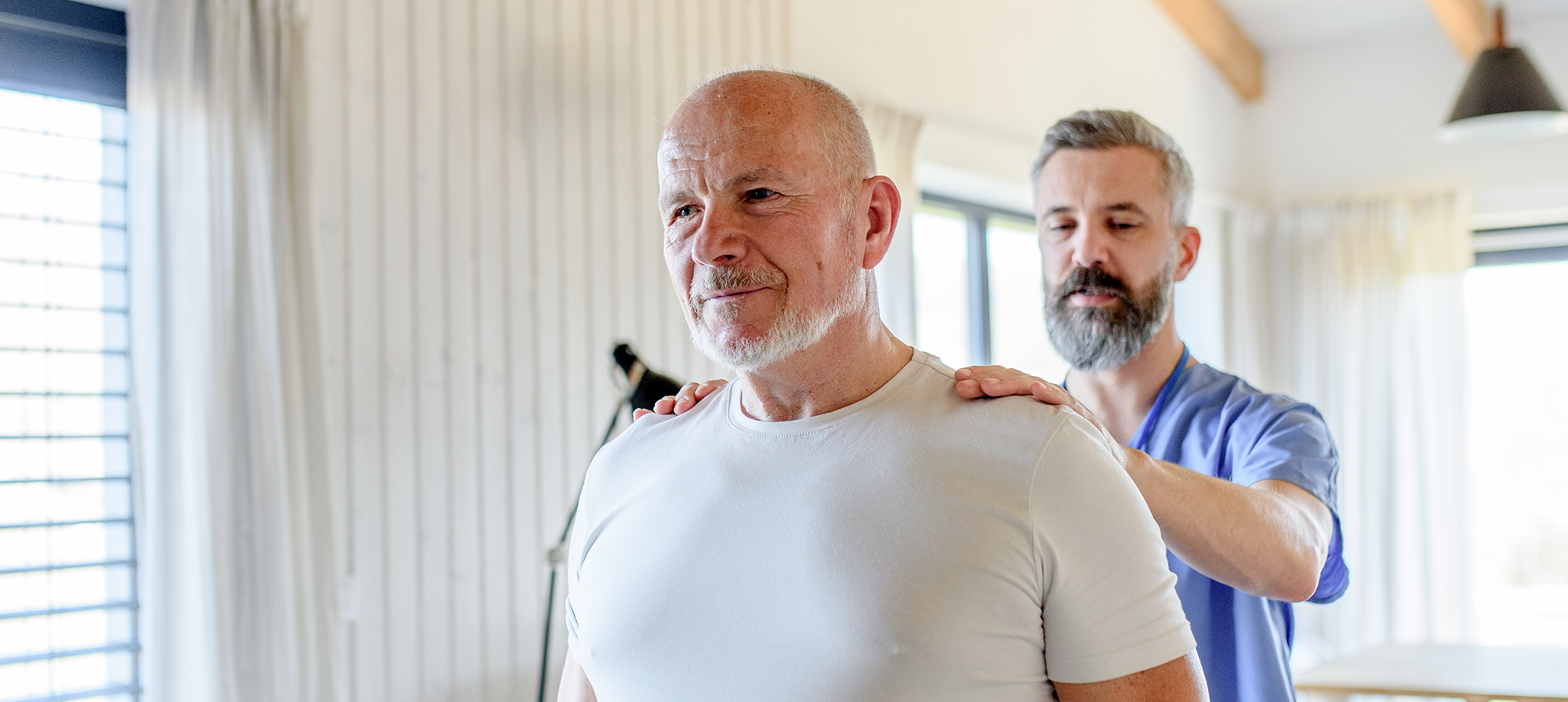
Aging often gets a bad rap—but reflect for a moment, and you may find it can be rather fulfilling. Read on to shift your perspective on growing older.
It’s true that aging brings change, but it can also bring unexpected rewards. There are many benefits of aging that people don’t always talk about. In fact, researchers are studying how life improves as the years go by. From wisdom to greater life satisfaction—you may be pleasantly surprised to learn about these benefits of aging.
Healthy aging doesn’t mean your body won’t have its share of aches and pains. In fact, healthy aging isn’t about avoiding every health issue. It’s about adapting to life’s changes with healthy habits and a positive attitude. Some people may view aging as a decline. But you can also think of aging as another way to say living. It can be helpful to view aging in this new light.

Here are a few reasons why this time in your life is often called the “golden years":
-
Happiness and life fulfillment often rise. You may be pleasantly surprised to hear that life satisfaction often peaks in the 50s, 60s, and 70s. Many large studies have found that contentment climbs after age 50. By this point, you’ve had more practice being positive. You’ve seen more often that things tend to get better after hard times. You may also have a more established community to share life with.
Plus, for many, the constant pull to achieve is largely a thing of the past. This is your time to sit back and admire the fruits of your labors. If you’ve retired, you may now have more freedom to get back into hobbies that bring you joy. With age comes acceptance and a clearer sense of purpose, both of which lead to true feelings of joy and fulfillment. Best-selling author Mary Oliver wrote, “If you suddenly and unexpectedly feel joy, don’t hesitate. Give in to it […] Joy is not made to be a crumb. -
The brain finds new ways to work. While certain mental processes do slow with age, the brain adapts very well. In fact, much of this “slowing” is just your brain adjusting. MRI research shows that while younger adults tend to rely on one side of the prefrontal cortex for complex tasks, older adults are more likely to engage both sides of the brain. This can help them function more effectively.
Multitasking may be trickier since the brain takes a moment to switch between tasks starting in middle age. But the healthily aging brain makes up for that by recruiting more regions. It also relies on experience, knowledge, and skills gained over your lifetime. So, your brain is not simply declining with time. It’s adapting and changing its processes. Give yourself grace during this transition—your brain is doing powerful stuff! - Emotional resilience increases. With age, people tend to use healthier emotional regulation strategies and maintain more positive moods. Studies have found that people in their 60s and 70s report fewer negative reactions to daily stress compared with young adults. This is especially true for those who stay connected with others. To make the most of this benefit, try to avoid too much social isolation.
Hormonal shifts may also play a large role in emotional balance. The end of perimenopause can lead to women feeling more stable. As testosterone levels drop (in both men and women), impulse control improves, helping you better regulate your emotional responses.
- Reasoning skills improve. More stable hormones and impulses also mean you’re less likely to rush when making judgments. Thanks to years of experience, your ability to recognize patterns improves with age. And you can approach decisions with more perspective. The wisdom gained over the years compensates for any decline in processing speed. But even with your reasoning superpowers, it's still important to fact-check information and protect yourself from scams.
- With maturity comes mastery. “With age comes wisdom” is more than just a common expression. It’s the truth. Experience helps solidify your intelligence, knowledge, vocabulary, and long-term insight. You may find you’re more proficient at some skills or hobbies than you used to be.
A study of air traffic controllers and pilots found that adults aged 50 to 69 needed slightly more time to learn new equipment than younger workers. But they were more accurate and made fewer mistakes once trained! Healthy aging may mean you have an advantage in accuracy. So, learn to value a slow and steady pace if that’s what best aligns with your lifestyle. - Priorities shift. Meaningful experiences become more of a core value later in life. Have you noticed that time seems to pass more quickly as the years go by? As you become more aware of fleeting moments, you may place greater value on close relationships and emotionally fulfilling days. And instead of spending time searching for your passion or purpose, you can now spend more time investing your energy in enjoying them.
Retirement may also lead to a big shift in your priorities, giving you the freedom to lean into your passions outside of work. Maybe you value rest over rushing now. Or traveling rather than climbing the career ladder. Plus, older adults may have a greater sense of self-acceptance and tend to compare themselves to others less than younger adults. So, now’s the time to focus on what means most to you and stop chasing things that others have.

Mindset matters
Beliefs about aging influence how you perceive it. Research also shows that positive attitudes are linked to longer life and better mental well-being. This is easier said than done. But try your best each day to view aging as growth.
Think of it this way: the passage of time may mean getting older. But time is also required to see progress—you have the potential to grow stronger, smarter, and healthier. Make the most of that time by investing in your future self. It also helps to show gratitude for the privilege of healthy aging. Ask yourself these questions, or even journal about them, to help shift your mindset:
-
What have I gained that I didn’t have at 30 or 40?
-
If my younger self could see me now, what would make them most proud?
-
What is my body able to do each day?
-
How has my definition of beauty or strength changed since my youth? If it hasn’t, how can it change?
-
What traits define me that have nothing to do with age?
-
Where do I hope to see myself in the next 5 years?
Keep in mind this wisdom from author and activist Betty Friedan: “Aging is not lost youth, but a new stage of opportunity and strength.” Growing older isn’t about becoming less of yourself. It’s about becoming more fully yourself. Look beyond the grey hairs and wrinkles, and you can notice the value of healthy aging in your own life.
Not a Silver&Fit® member? Learn more about everything the program has to offer, including more helpful healthy living tips like this, here on our website.
This information is not intended to take the place of regular medical care or advice. Please check with your doctor before using this information or beginning any self-care program. Images used for this article do not depict any members of the Silver&Fit program.
References
CaringBridge. (n.d.). Life in your 50s: Therapeutic journaling tool for the sandwich generation. CaringBridge. https://www.caringbridge.org/resources/life-in-your-50s-journaling-prompts
Cole, D. M. (2025, May 5). The surprising advantages of aging. Grand River Hospital District. https://grandriverhealth.org/the-surprising-advantages-of-aging/
Harvard Health Publishing. (2015, March 17). Why you should thank your aging brain. Harvard Medical School. https://www.health.harvard.edu/mind-and-mood/why-you-should-thank-your-aging-brain
Horizon House. (2025, June 17). 5 surprising benefits of aging no one talks about. https://horizonhouse.org/5-surprising-benefits-of-aging-no-one-talks-about/
Hudomiet, P., Hurd, M. D., & Rohwedder, S. (2021). The age profile of life satisfaction after age 65 in the U.S. Journal of Economic Behavior & Organization, 189, 431–442. https://doi.org/10.1016/j.jebo.2021.07.002
Lange, B. (2022, August 16). The benefits of aging. Columbia University Irving Medical Center. https://www.cuimc.columbia.edu/news/benefits-aging
Li, Z., Moore, A. B., Tyner, C., & Hu, X. (2009). Asymmetric connectivity reduction and its relationship to “HAROLD” in aging brain. Brain Research, 1295, 149–158. https://doi.org/10.1016/j.brainres.2009.08.004
Whitman, K., Chen, E., Stephenson, J., & Carstensen, L. (2024). Age and emotion: Age moderates the relationship between mixed emotional experiences and psychological well-being. Innovation in Aging, 8(Supplement_1), 1286. https://doi.org/10.1093/geroni/igae098.4111
This article was written by Celina Johnson, edited by Jason Nielsen, and clinically reviewed by Elizabeth Thompson, MPH, RDN, on August 31, 2026.