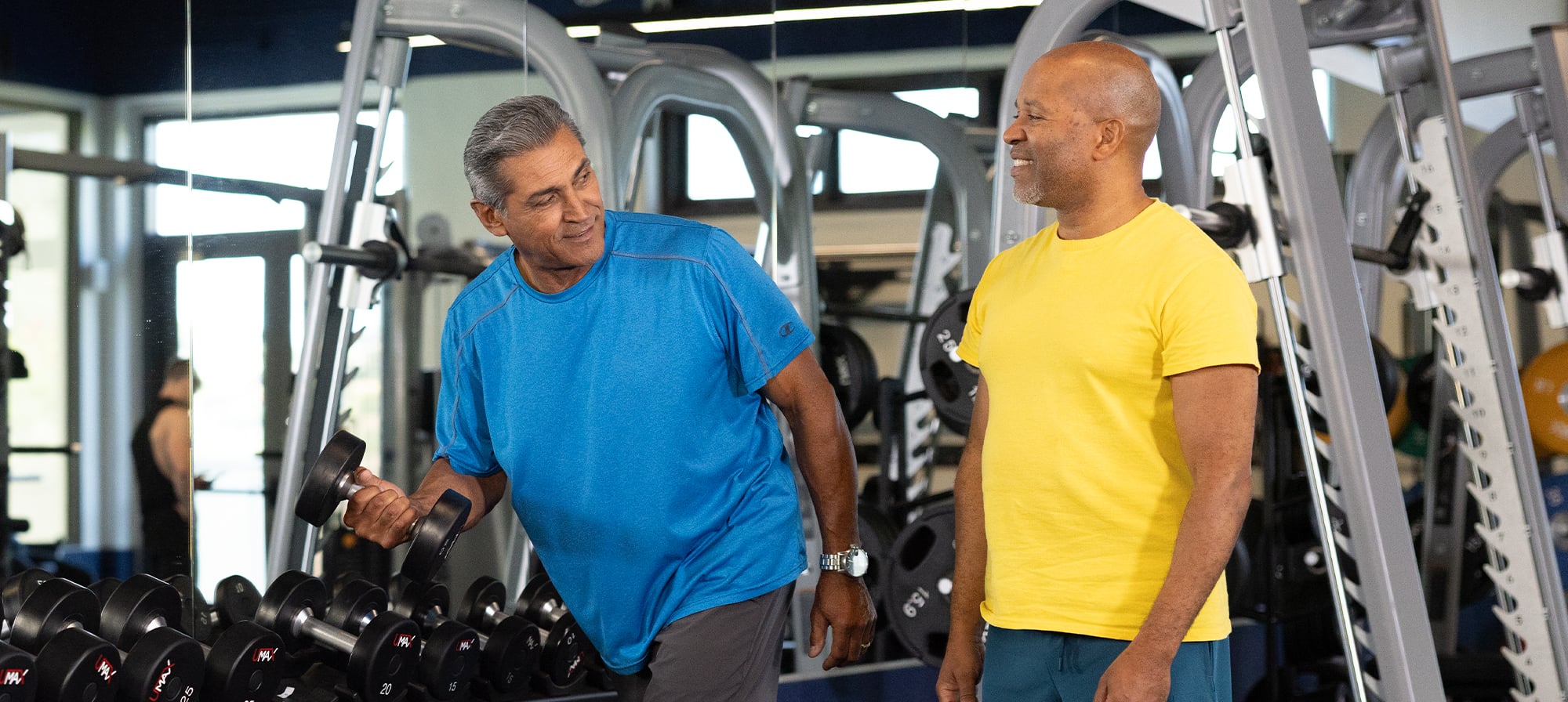
Think you’re too old for strength training? Learn the truth behind 6 common strength training myths and why it’s not only safe, but an important part of healthy aging.
If you’ve hesitated to get started with a strength training routine for fear that you may be “too old” to do so, you’re not alone. A lot of older adults may have been led to believe that strength training just isn’t for them. Maybe out of fear that it’s not safe. Or that it’s not healthy for your joints. But you might want to reconsider. Common beliefs like these may be keeping you from utilizing one of the most powerful tools for your health.
Not only can strength training help build muscle, but it can also improve balance, support healthy joints, and help make everyday activities easier. The truth is, many of the reasons people avoid strength training are based on myths, not facts. If you can separate fact from fiction, you may find that it’s never too late to start getting stronger.
Take a look at these 6 myths that might be keeping you from enjoying the benefits of strength training.
 Myth 1: “Strength training is dangerous for older adults.”
This is one of the more common myths. Among a lot of older adults, there’s a genuine fear of injury. Some may associate lifting weights with strained backs, torn muscles, or getting hurt at the gym.
But the reality is, that’s simply not the case for most adults. Research shows that, with proper form and gradual progression, older adults have as much to gain from strength training as anyone. Your muscles are designed to adapt when they’re challenged. While progress may happen a little bit slower than it does for younger adults, your body will respond to training and get stronger in the process.
To protect yourself from injury, don’t forget to incorporate stretching into your strength training routine.
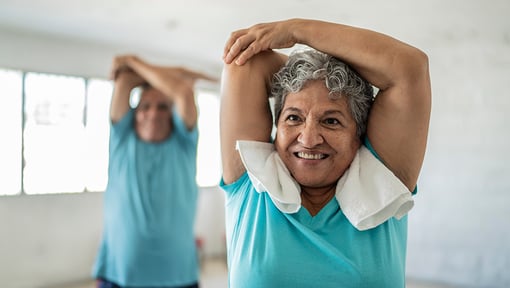
Myth 2: “I’m too old to build muscle.”
It’s true that as you age, you’ll naturally begin to lose muscle mass. And trying to build it back may not happen as quickly as it does in younger years. But muscle growth is not just possible with older adults—it’s crucial for your health. Studies show that, with regular strength training, people in their 70s, 80s, and beyond can slow down muscle loss and even rebuild lost muscle.
Strength training can help manage a number of chronic conditions. These include arthritis, back pain, obesity, heart disease, depression, and diabetes. It can also improve muscle, tendon, and ligament strength, as well as boost bone density and metabolism.
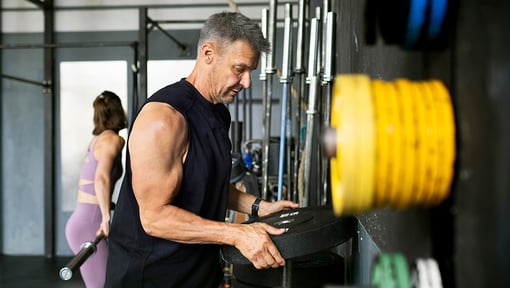
Myth 3: “Lifting weights will make me bulky.”
Another common reason people avoid strength training is a fear of becoming too muscular. But for most older adults, developing a bulky physique is highly unlikely.
To truly achieve that bodybuilder appearance, at any age, it takes a combination of specific types of training, genetics, and years of focused effort. A typical strength training program designed to help you stay strong in your later years is not going to turn you into a muscle-bound hulk.
Strength training is much more likely to lead to improved mobility and physical function in your daily life. You’ll feel stronger and will be able to move more easily, but you probably won’t see a dramatic change in your size.
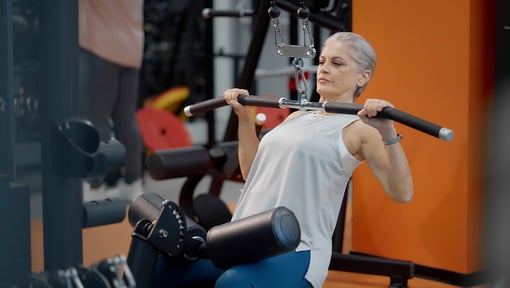
Myth 4: “Walking is enough for me. I don’t need strength training.”
A walking routine is one of the healthiest activities you can take part in. Avoiding a sedentary lifestyle can help your heart health, improve your mood, and keep you more physically active.
But walking on its own doesn’t provide everything your body needs to maintain muscle and strength over time. Your muscles need more of a challenge than walking can normally provide. Strength training places targeted stress on muscles, which encourages them to stay strong as you get older.
So, by all means, don’t give up a walking routine if you have one! Combining strength training with a walking routine will give you the best of both worlds.

Myth 5: “I need a gym or access to heavy weights to get stronger.”
Having access to all the weights and machines you’ll find in a gym is certainly an excellent way to start a strength training routine. But that doesn’t mean you can’t build up strength without a gym membership. You can do many strength-training exercises at home using little to no equipment.
Your own body weight can provide you with plenty of the resistance needed for strength training. Think exercises like push-ups (any variation), chair squats, step-ups, and standing calf raises. And that’s just getting started. You can also use resistance bands for an affordable, easy-to-use option for building strength in just about every major muscle group.
What matters most isn’t access to heavy weights. It’s finding ways to regularly work your muscles to do a little bit more than they’re used to doing. You do need to increase resistance/load to get stronger, so as exercises start to get too easy, you’ll want to gradually find ways to make it more challenging.
Whether at a gym, outdoors in the park, or in your living room, the best workout is one that you’ll actually stick with.

Myth 6: “If I have arthritis or joint pain, I should avoid strength training.”
When you have joint pain, you might be nervous about taking part in exercise. But avoiding movement altogether can actually make joint pain symptoms worse over time.
When the muscles surrounding a joint become stronger, they help support and stabilize that joint. That’s why strength training can be such an important tool. It can help reduce stress on the area around your joints, improving your ability to get around with day-to-day tasks. Strength training can help you maintain your mobility as you get older.
The key is to choose the right exercises for you. You’ll want to talk with your doctor or physical therapist first about appropriate exercises before you get started. But in most cases, strength training isn’t something to avoid. It can very likely help improve your situation.
Turning the myths around
Myths and misconceptions around strength training can understandably make you feel a little hesitant about trying it. But aging shouldn’t mean that you need to give up strength. In fact, adding a strength training routine into your life may be one of the best things you can do to help your body stay capable and resilient. Letting go of outdated beliefs can help you take a big step toward staying healthy and independent for years to come.
Just remember to check with your doctor or physical therapist before starting any new exercises or exercise program. When you do get going with strength training, start slowly. Then progress as you are able by adding more sets and/or load to challenge your muscles further.
Not a Silver&Fit® member? Learn more about everything the program has to offer, including more helpful healthy living tips like this, here on our website.
This information is not intended to take the place of regular medical care or advice. Please check with your doctor before using this information or beginning any self-care program. Images used for this article do not depict any members of the Silver&Fit program.
References
Bowman, A. (2024). The many benefits of resistance training as you age. Mayo Clinic Press. https://mcpress.mayoclinic.org/healthy-aging/the-many-benefits-of-resistance-training-as-you-age/
Cannataro, R., Cione, E., Bonilla, D. A., Cerullo, G., Angelini, F., & D’Antona, G. (2022). Strength training in elderly: An useful tool against sarcopenia. Frontiers in Sports and Active Living, 4, Article 950949. https://doi.org/10.3389/fspor.2022.950949
Medical News Today. (2024). Strength training for older adults: Benefits and sample exercises. https://www.medicalnewstoday.com/articles/older-adult-strength-training
National Institute on Aging. (2022). How can strength training build healthier bodies as we age? National Institutes of Health. https://www.nia.nih.gov/news/how-can-strength-training-build-healthier-bodies-we-age
Sun, R., Wan, J., Tang, J., Deng, Y., Zhang, M., Liu, C., Li, J., & Zhang, Q. (2025). Effectiveness of resistance training on body composition, muscle strength, and biomarker in sarcopenic older adults: A meta-analysis of randomized controlled trials. Archives of Gerontology and Geriatrics, 128, 105595. https://doi.org/10.1016/j.archger.2024.105595
This article was written by Jason Nielsen, edited by Celina Johnson, and clinically reviewed by Jaynie Bjornaraa, PhD, MPH, PT, LAT, ATC, CSCS, CSPS, on August 27, 2026.