---
title: Making Good Choices With Healthy Fats
description: Healthy fats are polyunsaturated or monounsaturated fats. Eat plenty of these and go easy on saturated fats.
image: https://blog.silverandfit.com/hubfs/SF%20Blog/Article%20Images/Blog%20188%20-%20Healthy-fats/blog_188_feature.png
---
[LOG IN](https://www.silverandfit.com/identity/login) [Check Eligibility](https://www.silverandfit.com/identity/registration)
- [HOMEPAGE](https://www.silverandfit.com/)
- [WELL-BEING CLUB](https://www.silverandfit.com/well-being-club)
- [FITNESS CENTERS](https://www.silverandfit.com/search)
- FIT AT HOME
- [Workouts](https://www.silverandfit.com/workouts)
- [Home Kits](https://www.silverandfit.com/home-kits)
- [PARTICIPATING HEALTH PLANS](https://www.silverandfit.com/health-plans)
- [HOW IT WORKS](https://www.silverandfit.com/how-it-works)
- [FAQ](https://www.silverandfit.com/faq)
- [BLOG](https://blog.silverandfit.com/)
### Topics
- Select a Topic
- [All](https://blog.silverandfit.com)
- [Nutrition](https://blog.silverandfit.com/tag/nutrition)
- [Healthy Aging](https://blog.silverandfit.com/tag/healthy-aging)
- [Fitness](https://blog.silverandfit.com/tag/fitness)
- [Lifestyle](https://blog.silverandfit.com/tag/lifestyle)
### Get the latest tips in your inbox
SUBSCRIBE

By providing your email you consent to receiving updates to the Silver&Fit blog by email. Silver&Fit does not share or sell your email to any third-parties. You may unsubscribe at any time by clicking the link at the bottom of the email.
[Nutrition](https://blog.silverandfit.com/tag/nutrition)
# Making Good Choices With Healthy Fats

By [The Silver&Fit® Team at American Specialty Health](https://blog.silverandfit.com/author/american-specialty-health) on January 5, 2026
[](http://www.facebook.com/sharer/sharer.php?u=https://blog.silverandfit.com/tag/nutrition/healthy-fats) [](https://twitter.com/home?status=Making%20Good%20Choices%20With%20Healthy%20Fats+https://blog.silverandfit.com/tag/nutrition/healthy-fats) [](http://www.linkedin.com/shareArticle?mini=true&url=https://blog.silverandfit.com/tag/nutrition/healthy-fats) [](mailto:?body=https://blog.silverandfit.com/tag/nutrition/healthy-fats)

Healthy fats are polyunsaturated or monounsaturated fats. Eat plenty of these and go easy on saturated fats.
When it comes to healthy eating, fats often get a bad rap. Yes, they can be high in calories. But that doesn’t mean fats must be avoided. The truth is, not all fats are created equal. Some healthy fats are essential for your health, while others should be avoided or limited. Then there’s a few that fall somewhere in between.
The key is knowing which fats promote well-being and which ones may pose risks to your health. By learning to recognize the differences, you can make informed choices. You will want to include healthy fats in your food plan for overall wellness.
Read on to start exploring which fats are best for you. A little knowledge will make it easy to take steps toward a healthier lifestyle.
Benefits of fats
Healthy fats bring a [wide range of health benefits](https://www.uclahealth.org/news/article/eating-healthy-fats-has-many-benefits). They can:
- Lower the risk of heart disease
- Improve cholesterol levels
- Help control blood sugar levels
- Lower inflammation
- Keep blood pressure at healthy levels
- Contribute to gut health
- Boost the immune system
- Aid brain function
- Maintain good metabolism
- Boost bone health
- Aid skin and hair growth
Fats also satisfy your hunger and help you know when you are full.
That’s quite a long list of benefits. There are so many reasons to include healthy fats in your food plan!
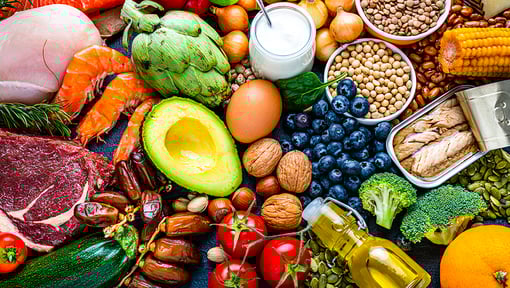
But what about all the calories in fats?
Fats are one of the 4 main types of nutrients you need. The other macronutrients are:
- Proteins
- Carbohydrates
- Water
Of these, fats have the highest number of calories at 9 calories per gram. That’s more than double the 4 calories per gram found in carbs and proteins. While this means you will want to watch the amount of fats you eat, it doesn’t mean you should cut them out entirely.
Take nuts, for example. Almonds and walnuts are packed with healthy fats and have been shown to lower the risk of heart issues. So, rather than avoid nuts, simply take care to limit the amount you eat to keep from taking in too many calories.
You can add 30 grams of nuts every day for just 270 calories (30 x 9 calories per gram). This is about 10 whole walnuts or 20 almonds. And those calories give you great health benefits.
**What are “good” fats and “bad” fats?**
Unsaturated fats are considered “good” fats and are found in plant foods and fish. These fats include polyunsaturated fats and monounsaturated fats.
Fats to limit or avoid—the so-called “bad” fats—are saturated fats and trans fats. These are found in meat products, butter and cheese, and baked goods such as cakes, cookies, and pastries.
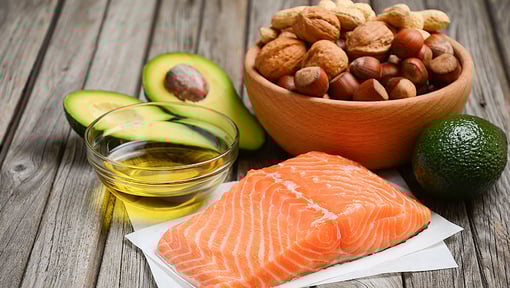
Polyunsaturated fats
Polyunsaturated fats are *essential* fats. That means you need them for normal body functions. But your body can't make them, so you need to get them from food.
Polyunsaturated fats are liquid at room temperature. When you pour liquid cooking oil into a pan, you may be using polyunsaturated fat.
What do polyunsaturated fats do for your health?
- They help build cell membranes and nerve coverings.
- They are needed for blood clotting and muscle movement.
- They help [keep cholesterol levels healthy](https://nutritionsource.hsph.harvard.edu/what-should-you-eat/fats-and-cholesterol/).
- They can lower inflammation.
There are 2 main types of polyunsaturated fats: Omega-3 fatty acids and omega-6 fatty acids. These play an important role in brain function, skin and hair growth, bone health, and metabolism. It’s important to eat a balance of omega-3 and omega-6 fatty acids.
Many people get enough omega-6 acids in their diet without trying. Sources of omega-6 fatty acids include:
- Safflower oil
- Sunflower oil and seeds
- Sesame oil and seeds
- Corn oil
- Walnuts
- Pumpkin seeds
On the other hand, many people do not get enough omega-3 acids in their diets. It’s a good idea to aim to eat some foods high in omega-3 acids each day. Sources of omega-3 fatty acids include:
- Olive, soybean, canola, and flaxseed oils
- Fatty, cold-water fish like salmon and sardines
- Some types of nuts and seeds, such as walnuts and flaxseeds
- Some vegetables, such as kale, Brussels sprouts, and spinach
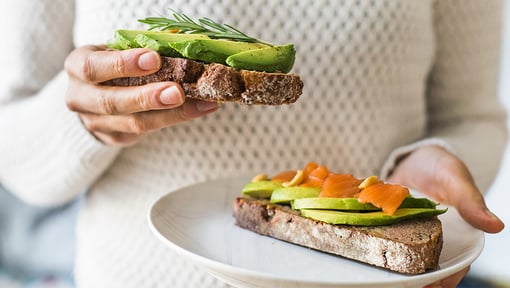
Monounsaturated fats
When you dip fresh bread in olive oil at an Italian restaurant, you're getting mostly monounsaturated fat. Like polyunsaturated fats, monounsaturated fats are liquid at room temperature.
These healthy fats can help keep your cholesterol levels in check. And they can help maintain healthy blood sugar levels.
Sources of monounsaturated fats include:
- Olive oil
- Peanut oil
- Canola oil
- [Avocados](https://blog.silverandfit.com/tag/nutrition/avocado)
- Safflower oil
- Sunflower oil
- Most nuts
- Peanut butter and almond butter
Healthy fats may fall into more than one category of fats. For example, olive oil is about 75 percent *monounsaturated fatty* acids and 10 percent *polyunsaturated* fatty acids. The remaining 15 percent is saturated fatty acids. Olive oil is usually put in the monounsaturated fats category as that is the largest portion of this oil.
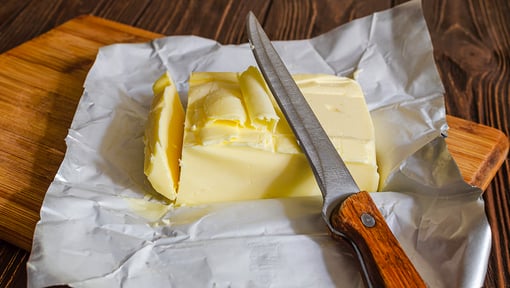
Saturated fats
Saturated fats are sometimes called the “in-between” fats. While not as good or as bad as other fats, it’s best to limit saturated fats. These are found mostly in meats and dairy, but also plant oils like palm and coconut oil.
Most saturated fats are solid at room temperature. (Butter is a prime example.)
Unlike unsaturated fats, you don’t need saturated fats in your diet. But a lot of your favorite foods probably fall into this category. Rather than trying to cut these fats completely out of your diet, try to limit it to no more than 10 percent of your total daily calories.
Too much saturated fat may:
- Raise your cholesterol level
- Raise the risk of heart issues
- Raise the risk of some types of cancer
Sources of saturated fats to limit in your food plan include:
- Burgers
- Red meat
- Lunchmeat sandwiches
- Cheese
- Flour tortillas
- Ice cream
- Desserts
- Sweet snacks
If you find you tend to eat foods high in saturated fats, look for some swaps you can make. Instead of cooking with butter, try olive oil. Or instead of a fatty meat, choose a plant protein like lentils, beans, or tofu.
Check the nutrition label on packaged foods to find out the amount of saturated fat in a serving.
Trans fatty acids (trans fats)
Trans fats are often found in [ultra-processed foods](https://blog.silverandfit.com/tag/nutrition/ultra-processed-foods). These include packaged snacks, baked goods, and fast food. Almost all trans fats are man-made fats created to help the structure of packaged foods and to extend a food’s shelf life at the supermarket.
Research has shown that trans fats can have a harmful effect on the body. In fact, the FDA banned the addition of partially hydrogenated oils (trans fats) to marketed foods in 2021. For that reason, trans fats are rarely found today. However, small amounts can naturally occur in some animal products and are still available.
Food swap ideas
As you think about the foods you eat, look for places to swap out those high in saturated or trans fats with more healthy fats. Here are some ideas:
- Choose nuts instead of packaged chips.
- Choose dark chocolate in place of packaged cookies or cakes.
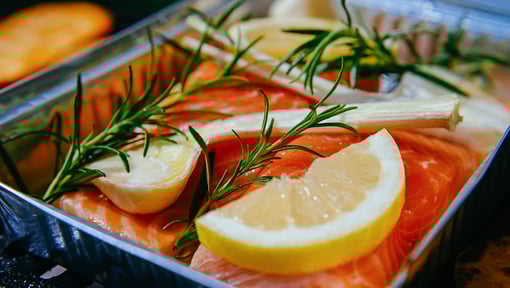
- Broil salmon for dinner instead of steak.
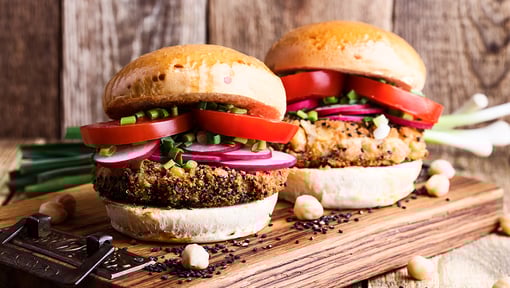
- Make a [tasty black bean burger](https://blog.silverandfit.com/tag/nutrition/black-bean) instead of eating a ground beef burger.
- Make a salad dressing of oil, vinegar, and lemon juice instead of buying a bottle of creamy dressing.
- Use plain Greek yogurt in place of sour cream on veggies and tacos.
- Layer avocado slices on your sandwich instead of spreading on mayonnaise.
- Munch on raw veggies, such as carrots or cucumbers, instead of crackers.
- Bake using applesauce in place of butter.
Including more healthy fats in your food plan will pay off in health dividends. Cook with vegetable oils, limit saturated fats, and avoid trans fats. And enjoy at least one good source of omega-3 fats each day, whether it’s salmon, a spinach salad, or a handful of walnuts. You’ll savor the variety of flavors and textures, and you will be doing your best to stay healthy, too!
Not a Silver&Fit® member? Learn more about everything the program has to offer, including more helpful healthy living tips like this, [here on our website](https://www.silverandfit.com/).
*This information is not intended to take the place of regular medical care or advice. Please check with your doctor before using this information or beginning any self-care program. Images used for this article do not depict any members of the Silver&Fit program.*
References
Botella-Martínez, C., Pérez-Álvarez, J. Á., Sayas-Barberá, E., Navarro Rodríguez de Vera, C., Fernández-López, J., & Viuda-Martos, M. (2023). Healthier oils: A new scope in the development of functional meat and dairy products: A review. Biomolecules, 13(5), 778. [https://doi.org/10.3390/biom13050778](https://doi.org/10.3390/biom13050778)
Cleveland Clinic. (2024, December 9). Fats. [https://my.clevelandclinic.org/health/articles/fats](https://my.clevelandclinic.org/health/articles/fats)
Hartford Healthcare. (n.d.). 10 food swaps to make today, according to a dietician. [https://stvincents.org/about-us/news-press/news-detail?articleId=54237&publicid=745](https://stvincents.org/about-us/news-press/news-detail?articleId=54237&publicid=745)
Harvard Health Publishing. (2022, April 12). The truth about fats: The good, the bad, and the in-between. [https://www.health.harvard.edu/staying-healthy/the-truth-about-fats-bad-and-good](https://www.health.harvard.edu/staying-healthy/the-truth-about-fats-bad-and-good)
Harvard T. H. Chan School of Public Health. (n.d.). Fats and cholesterol. [https://nutritionsource.hsph.harvard.edu/what-should-you-eat/fats-and-cholesterol/](https://nutritionsource.hsph.harvard.edu/what-should-you-eat/fats-and-cholesterol/)
Johns Hopkins Medicine. (n.d.). 5 heart-healthy food swaps. [https://www.hopkinsmedicine.org/health/wellness-and-prevention/5-hearthealthy-food-swaps](https://www.hopkinsmedicine.org/health/wellness-and-prevention/5-hearthealthy-food-swaps)
Mayo Clinic. (2023, February 15). Dietary fat: Know which to choose. [https://www.mayoclinic.org/healthy-lifestyle/nutrition-and-healthy-eating/in-depth/fat/art-20045550](https://www.mayoclinic.org/healthy-lifestyle/nutrition-and-healthy-eating/in-depth/fat/art-20045550)
Stanford Healthcare. (2004). Good fats, bad fats. [https://stanfordhealthcare.org/content/dam/SHC/clinics/preventive-cardiology/docs/good-fats-bad-fats.pdf](https://stanfordhealthcare.org/content/dam/SHC/clinics/preventive-cardiology/docs/good-fats-bad-fats.pdf)
UCLA Health. (n.d.). Eating healthy fats has many benefits. [https://www.uclahealth.org/news/article/eating-healthy-fats-has-many-benefits](https://www.uclahealth.org/news/article/eating-healthy-fats-has-many-benefits)
U.S. Food and Drug Administration. (2024, April 30). Trans fat. [https://www.fda.gov/food/food-additives-petitions/trans-fat](https://www.fda.gov/food/food-additives-petitions/trans-fat)
This article was written by Sharon Odegaard, edited by Jason Nielsen, and clinically reviewed by Elizabeth Thompson, MPH, RDN, on October 29, 2025.
[Return to Homepage](https://blog.silverandfit.com/)
## About the Author

### The Silver&Fit® Team at American Specialty Health
The award-winning Silver&Fit® Blog is brought to life by a seasoned team of professionals at American Specialty Health (ASH), an organization with nearly 2 decades of experience in senior wellness programming. The Silver&Fit® blog writers, editors, clinicians, designers, and marketing specialists are dedicated to delivering engaging, informative wellness content. Every article is carefully researched and clinically reviewed for accuracy. Our goal? Content that supports healthy aging through trusted, research-based insights on fitness, nutrition, stress management, and more, tailored specifically for older adults seeking to live more vibrant, active, and healthy lives.
#### Recommended Articles
[](https://blog.silverandfit.com/tag/nutrition/fall-muffins)
##### [Fall Morning Muffins for a Cozy Start to Your Day](https://blog.silverandfit.com/tag/nutrition/fall-muffins)
\- September 7, 2026
[](https://blog.silverandfit.com/tag/nutrition/fiber-types)
##### [The Types of Fiber and Why They Matter](https://blog.silverandfit.com/tag/nutrition/fiber-types)
\- August 24, 2026
[](https://blog.silverandfit.com/tab/nutrition/fruit-salads)
##### [3 Cool, Tasty, and Nutritious Summer Fruit Salads](https://blog.silverandfit.com/tab/nutrition/fruit-salads)
\- August 3, 2026
### Popular Posts
### Get the latest tips from Silver&Fit in your inbox.
### Recent Post
### Recent Posts
[How to Build Empathy for Stronger Bonds and Better Health](https://blog.silverandfit.com/tag/lifestyle/empathy)
\- 5 January, 2026
[Training for Pickleball: Strength, Balance, and Injury Prevention](https://blog.silverandfit.com/tag/fitness/pickleball-training)
\- 5 January, 2026
[Why Solitude Is as Important to Your Well-Being as Socializing](https://blog.silverandfit.com/tag/lifestyle/solitude)
\- 5 January, 2026
[Nature RX: How Green Spaces Protect Your Brain Health](https://blog.silverandfit.com/tag/healthy-aging/green-spaces)
\- 5 January, 2026
[Fall Morning Muffins for a Cozy Start to Your Day](https://blog.silverandfit.com/tag/nutrition/fall-muffins)
\- 5 January, 2026
Brought To You By

### Silver&Fit
The Silver&Fit® program provides eligible members with a fitness center membership and options to stay Fit at Home.
-
-
-
-
-
### Topics
- [Nutrition (57)](https://blog.silverandfit.com/tag/nutrition)
- [Healthy Aging (55)](https://blog.silverandfit.com/tag/healthy-aging)
- [Fitness (53)](https://blog.silverandfit.com/tag/fitness)
- [Lifestyle (53)](https://blog.silverandfit.com/tag/lifestyle)
### We've been expertly designing senior fitness programs for nearly 20 years. Now, we're excited to share the health in our blog, free and available to the public. Interested? Get the latest fitness, healthy aging, lifestyle, and nutrition tips in your inbox!
SUBSCRIBE
[Facebookfacebook](https://www.facebook.com/SilverandFit) [Instagraminstagram](https://www.instagram.com/silverandfit/?hl=en) [youtube](https://www.youtube.com/user/silverandfit) [Pinterestpinterest](https://pinterest.com/silverandfit) [LinkedInlinkedin](https://www.linkedin.com/company/american-specialty-health)
- Useful Links
- [About Us](https://www.silverandfit.com/About)
- [Terms & Conditions](https://www.silverandfit.com/TermsAndConditions)
- [Privacy Statement](https://www.silverandfit.com/Privacy)
- [FAQ](https://www.silverandfit.com/FAQ)
- [Site Map](https://www.silverandfit.com/sitemap)
## Connect
[Contact Us](https://www.silverandfit.com/contactus)
## Language Assistance
The following PDF files will open in a new window. You must have [Adobe ReaderOpens an external site in a new tab](https://acrobat.adobe.com/us/en/acrobat/pdf-reader.html) installed to view the files.
- [English](https://blog.silverandfit.com/hubfs/SF%20Linked%20Files/M950-1031A%20Language%20Support_tcm26-161058.pdf)
- [Español](https://blog.silverandfit.com/hubfs/SF%20Linked%20Files/M950-1031A%20Language%20Support_tcm26-161058.pdf)
- [繁體中文](https://blog.silverandfit.com/hubfs/SF%20Linked%20Files/M950-1031A%20Language%20Support_tcm26-161058.pdf)
- [Tagalog](https://blog.silverandfit.com/hubfs/SF%20Linked%20Files/M950-1031A%20Language%20Support_tcm26-161058.pdf)
- [Tiếng Việt](https://blog.silverandfit.com/hubfs/SF%20Linked%20Files/M950-1031A%20Language%20Support_tcm26-161058.pdf)
- [العربية](https://blog.silverandfit.com/hubfs/SF%20Linked%20Files/M950-1031A%20Language%20Support_tcm26-161058.pdf)
- [Français](https://blog.silverandfit.com/hubfs/SF%20Linked%20Files/M950-1031A%20Language%20Support_tcm26-161058.pdf)
- [한국어](https://blog.silverandfit.com/hubfs/SF%20Linked%20Files/M950-1031A%20Language%20Support_tcm26-161058.pdf)
- [Русский](https://blog.silverandfit.com/hubfs/SF%20Linked%20Files/M950-1031A%20Language%20Support_tcm26-161058.pdf)
- [Deutsch](https://blog.silverandfit.com/hubfs/SF%20Linked%20Files/M950-1031A%20Language%20Support_tcm26-161058.pdf)
- [Kreyòl Ayisyen](https://blog.silverandfit.com/hubfs/SF%20Linked%20Files/M950-1031A%20Language%20Support_tcm26-161058.pdf)
- [हिंदी](https://blog.silverandfit.com/hubfs/SF%20Linked%20Files/M950-1031A%20Language%20Support_tcm26-161058.pdf)
- [Português](https://blog.silverandfit.com/hubfs/SF%20Linked%20Files/M950-1031A%20Language%20Support_tcm26-161058.pdf)
- [Italiano](https://blog.silverandfit.com/hubfs/SF%20Linked%20Files/M950-1031A%20Language%20Support_tcm26-161058.pdf)
- [Polski](https://blog.silverandfit.com/hubfs/SF%20Linked%20Files/M950-1031A%20Language%20Support_tcm26-161058.pdf)
- [اُردُو](https://blog.silverandfit.com/hubfs/SF%20Linked%20Files/M950-1031A%20Language%20Support_tcm26-161058.pdf)
- [אידיש](https://blog.silverandfit.com/hubfs/SF%20Linked%20Files/M950-1031A%20Language%20Support_tcm26-161058.pdf)
- [বাংলা](https://blog.silverandfit.com/hubfs/SF%20Linked%20Files/M950-1031A%20Language%20Support_tcm26-161058.pdf)
- [Ελληνικά](https://blog.silverandfit.com/hubfs/SF%20Linked%20Files/M950-1031A%20Language%20Support_tcm26-161058.pdf)
- [Shqiptar](https://blog.silverandfit.com/hubfs/SF%20Linked%20Files/M950-1031A%20Language%20Support_tcm26-161058.pdf)
Newtab\_Icon Clicking on these links will take you away from Silverandfit.com. Silver&Fit is not responsible for any content or the privacy practices of external websites.
The Silver&Fit program is a product of American Specialty Health Fitness, Inc. (ASH Fitness), a subsidiary of American Specialty Health Incorporated. ASH Fitness complies with applicable federal civil rights laws and does not discriminate on the basis of race, color, national origin, age, disability, or sex.
© 2020-2025 American Specialty Health Incorporated (ASH). All Rights Reserved.
Last Updated 11/2025