Learn how an active recovery day can support your fitness goals and keep you motivated and healthy.
When you lead an active lifestyle, you might find yourself wanting to keep it up every day. While movement is never a bad thing, high-intensity exercise day after day can be harmful. After a high-intensity workout, your body needs rest and time to recover. So, what exactly does that look like?
 Defining active recovery
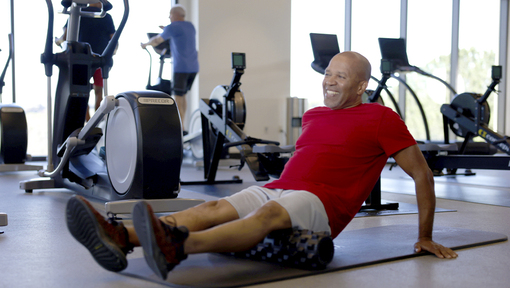
Active recovery is the middle ground between no movement at all and a high-intensity workout or days of moderate intensity in a row. It's made up of low-intensity movement, which includes activities like walking, swimming, or light yoga.
The goal of an active recovery day is to help your body recover from a consistent and moderate-to-vigorous workout routine. Light activity keeps your blood flowing without putting too much stress on recovering muscles. This is different from passive recovery, which means taking a full rest day. If you are in pain, have an injury, or are abnormally ‘body-tired’ after exercising, complete rest may be the better option. Otherwise, active recovery is the way to go.
You can think of active recovery in the same way your body needs sleep. Have you ever pulled an all-nighter or slept only a few hours? Did it leave you feeling “off” the next day? Did your productivity drop? Your motivation or effort?
Just as your body benefits from a good night’s sleep, it also benefits from the rest and recovery of an active recovery day. Besides increasing blood flow, active recovery can also help your body by:
-
Reducing muscle stiffness
-
Maintaining joint mobility
-
Supporting your nervous system
Active recovery isn’t just about helping your muscles and body recover from a high-intensity workout or repetitive days of exercising. It also offers mental perks. But not in the way you might think. There is no direct evidence that active recovery improves performance. Yet many active people and athletes still prefer light movement over a complete day of rest.
The mental benefit of simply feeling it was a good recovery day can boost your mood and keep you motivated for your next harder workout.
What to include in your active recovery workout
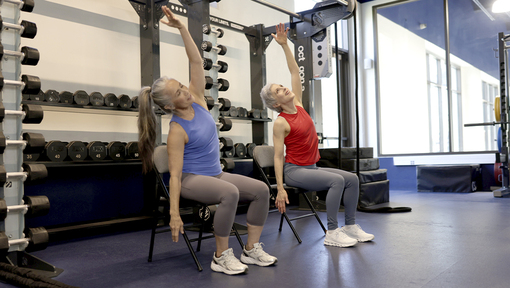
Some options for active recovery movements include:
-
Walking
-
Swimming
-
Light cycling
-
Gentle yoga
-
Mobility work
-
Massage or foam rolling
The effort should only be around 30 to 50 percent of your maximum. Keep in mind that this is around 50 percent of your max heart rate. If it feels too easy, that means you’re doing it right.
Here is how to build active recovery into your fitness routine.

An active recovery day
You can schedule your active recovery day between resistance training sessions, which older adults should do at least 2 days a week. Older adults also need 150 minutes of moderate-intensity aerobic exercise, 75 minutes of vigorous-intensity aerobic exercise, or a combination of the two. The idea is to balance medium- to high-intensity training with rest days. So, you can schedule your active recovery days within this window between strength training sessions.
How to keep active recovery light and effective
Everything about your active recovery should feel light. If you start breathing heavily or sweating, or if your muscles start to burn, those are signs that you’re pushing yourself too hard during your active recovery. And if it becomes too intense, it may undermine the purpose of the rest day workout.
A recovery day doesn’t have to feel like an “off day.” With active recovery, you add movement you enjoy to your day, so you stay motivated and ready for your next workout. By listening to your body and keeping the intensity low, you can make active recovery a supportive day in your fitness routine.
Not a Silver&Fit® member? Learn more about everything the program has to offer, including more helpful healthy living tips like this, here on our website.
This information is not intended to take the place of regular medical care or advice. Please check with your doctor before using this information or beginning any self-care program. Images used for this article do not depict any members of the Silver&Fit program.
References
Green, D. J., St. Pierre, I. A., Buchanan, C. A., & Dalleck, L. C. (2018, March). ACE-sponsored research: Active vs. passive recovery and exercise performance: Which strategy is best? American Council on Exercise. https://www.acefitness.org/continuing-education/certified/march-2018/6919/ace-sponsored-research-active-vs-passive-recovery-and-exercise-performance-which-strategy-is-best/
Belding, S. (2023, January 30). Can I do yoga or Pilates on my rest day? The Well by Northwell. https://thewell.northwell.edu/healthy-living-fitness/what-is-active-recovery
Cave, K. (2026, January 24). Active recovery: What it is and why it matters. National Academy of Sports Medicine. https://www.nasm.org/resource-center/blog/active-recovery
Centers for Disease Control and Prevention. (2025, December 4). Older adult activity: An overview. https://www.cdc.gov/physical-activity-basics/guidelines/older-adults.html
Dawes, J. J., Elder, C. L., Sinclair Elder, A. J., & Ortiz, R. O. (2019). A systematic review on the effectiveness of active recovery interventions on athletic performance of professional-, collegiate-, and competitive-level adult athletes. Journal of Strength & Conditioning Research, 33(8), 2275–2287. https://doi.org/10.1519/JSC.0000000000002589
Massar, S. A. A., Lim, J., & Huettel, S. A. (2019). Sleep deprivation, effort allocation and performance. Progress in Brain Research, 246, 1–26. https://doi.org/10.1016/bs.pbr.2019.03.007
Olmedillas, H., Vicente-Rodríguez, G., & Fares, R. (2021). Effect of active recovery protocols on the management of symptoms related to exercise-induced muscle damage: A systematic review. Strength & Conditioning Journal, 44(1), 57–70. https://doi.org/10.1519/SSC.0000000000000654
Ross, J. (2015, June 1). Passive vs. active recovery: Which is more effective? American Council on Exercise. https://www.acefitness.org/resources/pros/expert-articles/5456/passive-vs-active-recovery-which-is-more-effective/
ScienceInsights. (2026, March 11). What is an active recovery day vs. a rest day? https://scienceinsights.org/what-is-an-active-recovery-day-vs-a-rest-day/
ScienceInsights. (2026, March 21). What is active recovery and does it actually work? https://scienceinsights.org/what-is-active-recovery-and-does-it-actually-work/
This article was written by Stephanie Ruiz, edited by Jason Nielsen, and clinically reviewed by Jaynie Bjornaraa, PhD, MPH, PT, LAT, ATC, CSCS, CSPS, on August 6, 2026.