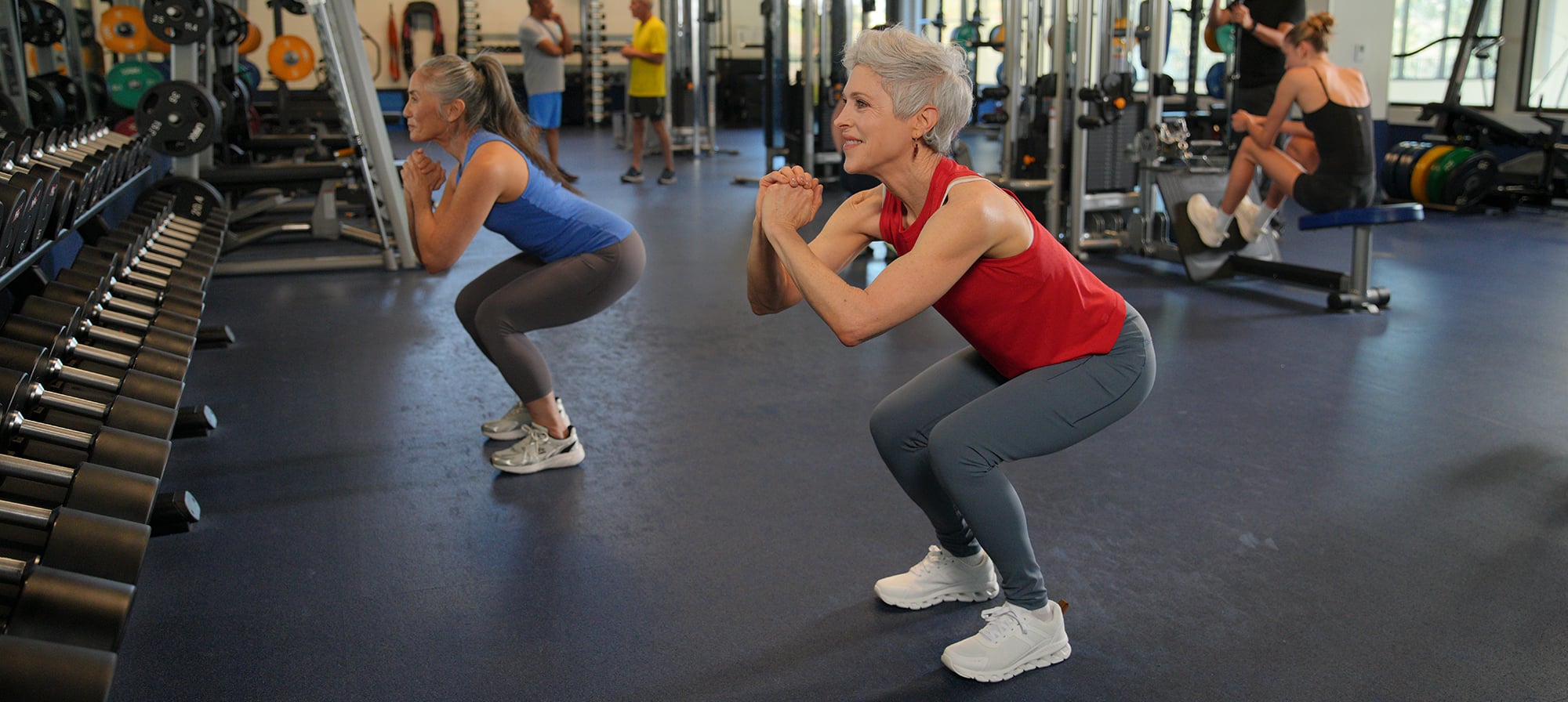
Hip pain is more common with age, but it's not inevitable. Plus, there are exercises you can do that are tailored to keep your hips strong and moving with less pain.
One way to lower your risk of developing hip pain is to stay active. Another equally important step? Adding exercises to your fitness routine that are specifically designed to keep your hips strong and mobile.
What if you already have hip pain? First, you should tell your doctor and consider working with a physical therapist. However, many of the same exercises that can help prevent hip pain may also help you lessen and better manage existing pain. Just make sure to get the OK from your doctor or physical therapist before doing the exercises below.
 The critical role your hips play in helping you move (safely)
Your hips play a huge role in just about every movement your body performs. Strong, mobile, well-functioning hip joints are critical for balance, walking, running, jumping, side-stepping, climbing stairs, bending over, sitting down, and standing up. The muscles surrounding your hip joints—along with your core and upper leg muscles—all play key roles in these movements. Strong hips help you change directions quickly, walk around obstacles, and recover your balance when you lose it—whether you’re standing still or moving. This, in turn, helps lessen your risk for falls.
Your hip bones also make up a majority of your pelvic girdle—your frame’s center of gravity and a stable base that supports your body weight and allows you to move both your upper and lower body (especially your lower body). Your hips are also key to helping maintain a healthy posture.

How healthy hips keep many other body parts pain free
Strong and mobile hips not only keep hip pain at bay—they also help keep low back and knee pain at bay. If the hips are weak, this tends to put extra stress and strain on the knees and lumbar spine (low back). That strain can lead to pain in these areas.
Similarly, mobile hip joints—ones that move smoothly and efficiently through their full range of motion—also keep knee and back pain at bay. But if your hip joints become immobile and stiff, they lose their full range of motion. This, in turn, can cause your knees and low back to move in dysfunctional, unhealthy ways—leading to pain and disability in these body parts, in addition to the hips.

9 exercise videos that will target your hips
To help you build and maintain the strength and mobility your hips need, check out the exercise videos below. Some help strengthen, and others help stretch the muscles that move and stabilize your hip joints. Talk with your doctor or physical therapist (PT) before beginning these exercises, especially if you have a health condition or existing hip pain or injury.
For the exercises below, you’ll need a yoga mat, a chair, a pillow, a sturdy object (like a dining room table), and a resistance band (or tubing).
1. Bridge. This exercise strengthens the glutes, the hamstrings (back of the thigh), core, and muscles in the low back. Perform 3 sets of 10 to 12 reps each. Rest a minute between each set.
2. Sit-to-stands. This exercise not only strengthens the glutes—it also targets the front and back thigh muscles and those in the lower legs. When you stand up, make sure to fully straighten your legs, stand tall, and engage all the muscles of your core and lower body. Then lower yourself slowly, in a controlled manner, back down to the chair. Perform 3 sets of 10 to 12 reps each. Rest for 1-2 minutes between each set.
3. Clamshell with resistance band. This exercise targets the muscles on the sides of the hip—especially the gluteus medius. Perform 3 sets of 10 reps on each side—alternating from one side to the other for each set.
4. Hip abduction with tubing. This exercise works the muscles of the hip joint that move your leg to the side, away from the midline of the body. It targets the glutes as well as muscles on the side of the hip. Perform 3 sets of 10 reps with both legs—alternating from one leg to the other for each set. Also, make sure to engage the muscles in your standing leg and hip, too, to keep it strong and stable. Make sure to keep upright and don’t flex at your hips as you lift your leg away from your body.
5. Hip extension in neutral with resistance band. This hip movement happens when you take a step backwards or raise one leg behind you. (Think of a beautiful arabesque performed by a ballet dancer.) Hip extension also happens during walking and running as you push off your back leg to stride forward with the other leg. It also allows you to stand up straight after you hinge forward at the hips to bend over. The muscles that extend the hip also help stabilize the pelvis and prevent it from tilting as you walk and run. Perform 3 sets of 10 to 12 reps with both legs—alternating from one leg to the other for each set. Make sure to engage the muscles in your standing leg and hip, too, to keep it strong and stable.
6. Standing adductor stretch. This mobility exercise helps stretch the muscles of the inner thighs. Hold each stretch for 30 seconds. Don’t hold your breath. Instead, keep breathing. You should stretch until you feel a sense of lengthening in your muscles, but not pain. Do this stretch three times on each side.
7. Standing hip flexor stretch. This stretches the front of your hip and thigh. Hold each stretch for 30 seconds. Keep breathing. Repeat 3x on the right leg and then the left.
8. Gluteal stretch. Hold each stretch for 30 seconds. Keep breathing. Stretch each side at least once. You should notice a slight sense of lengthening, but not pain, in your gluteal muscles.
9. All-fours posterior capsule hip stretch. This stretches the back and side of the hip. Hold each stretch for 30 seconds. Keep breathing. Perform 3x on each side.
Key takeaways
If you have existing hip pain or another injury or condition, talk with your doctor or a PT before doing these exercises. They can let you know if they’re safe for you to do. Your doctor can also help pinpoint whether any existing hip pain is due to a hip injury or other condition—such as arthritis, bursitis, or gluteal medius tendinopathy.
Once your doctor or PT gives you the thumbs up, go ahead and weave the hip exercises described above into your weekly routine. Aim to do them about 2 to 3 days per week, every other day. Doing these exercises on a consistent basis is key to keeping your hips strong, stable, and moving more freely.
Not a Silver&Fit® member? Learn more about everything the program has to offer, including more helpful healthy living tips like this, here on our website.
This information is not intended to take the place of regular medical care or advice. Please check with your doctor before using this information or beginning any self-care program. Images used for this article do not depict any members of the Silver&Fit program.
References
Arthritis Foundation. (n.d.). Exercises benefits for hip osteoarthritis. https://www.arthritis.org/health-wellness/healthy-living/physical-activity/getting-started/benefits-of-exercise-for-osteoarthritis
Cleveland Clinic. (2025, March 23). Hamstring muscles. https://my.clevelandclinic.org/health/body/21904-hamstring-muscles
Cleveland Clinic. (2024, September 24). Hip arthritis. https://my.clevelandclinic.org/health/diseases/hip-arthritis
Cleveland Clinic. (2025, June 24). Hip joint. https://my.clevelandclinic.org/health/body/24675-hip-joint
Kentucky Health News. (n.d.). The importance of hip mobility and strength. University of Kentucky. https://livewell.uky.edu/news/importance-hip-mobility-and-strength
Physiopedia. (n.d.). Hip flexors. https://www.physio-pedia.com/Hip_Flexors
Santamaría G, Rodríguez I, Rodríguez-Pérez V, Cobreros-Mielgo R, Lantarón-Caeiro E, Seco-Casares M, Fernández-Lázaro D. (2023). Effect of hip muscle strengthening exercises on pain and disability in patients with non-specific low back pain—A systematic review. Sports (Basel), 11(9): 167. https://doi.org/10.3390/sports11090167
This article was written by Gail Olson, CMT, HHP, edited by Celina Johnson, and clinically reviewed by Jaynie Bjornaraa, PhD, MPH, PT, LAT, ATS, CSCS, CSPS, on May 27, 2026.